Video highlights

2011/2012 artificial track


Natural Track TV

FIL Media Guide 2012/2013

The FIL Luge Media Guide 2012/2013 can now be downloaded as a pdf file.

Click here to download

Natural and Artificial Track Luge

What's the difference? The first international luge race was held as long ago as 1883 in Davos, Switzerland. In 1957 the first artifical track was constructed in Imst, Austria. Over time two disciplines have emerged. It is these distinctive differences that make the two sports so unique.


The Tracks

Artifical Track

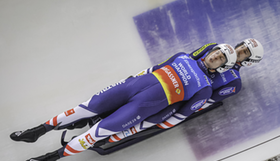
Artificial Tracks have specially designed and constructed banked curves plus walled-in straights. Most tracks are artifically refrigerated, but artifical tracks without artifical cooling als exists (for example, St. Moritz). Artificial Track Luge has been an Olympic discipline since 1946.

Natural Track

Natural Tracks are adapted from existing mountain roads and paths. Artifically banked curves are not permitted. The tracks's surface must be horizontal. They are naturally iced, there is no artificial refrigeration.

Athletes Sledding Technique

Artificial Track

The athletes ride in an aerodynamic and flat position on the sled, keep their heads low and steer by shifting their body weight as well as pressing in on the runners with their feet. They speed around high banked curves pulling a gravitational up to approximately  5 G.

Natural Track

Athletes use a steering strap and drag their arms and legs in order to drive around the tight flat corners. Braking is often required in front of curves and is accomplished by the use of spikes built on the bottom of the shoes.

The Sled

Artificial Track

Aerodynamics is everything. Sleds are constructed in a way to reduce aerodynamic resistance as much as possible.

Natural Track

Sled are very flexible to help in steering and use razor sharp blades. The seat is designed to hold the athlete in place while braking and steering on the rough ice.