






Andrea Vötter/Marion Oberhofer – the perfect duo
2026 Winter Olympics at home
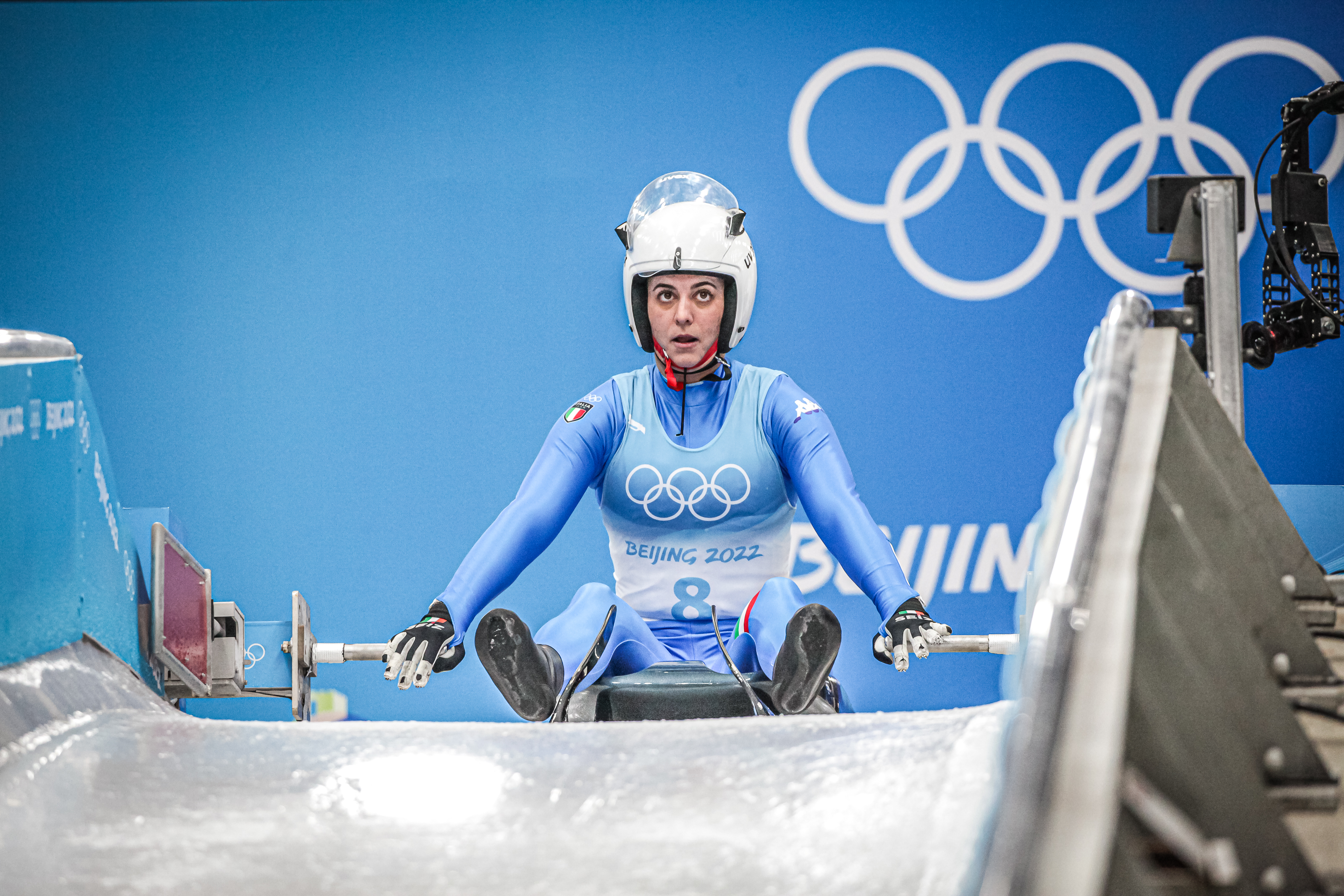
Cortina (FIL/04 Feb 2026) It was love at first ride. “The new ice track in Cortina is my favorite,” says Andrea Vötter. Her partner Marion Oberhofer explains why: “It starts well at the start, followed by big curves where you have to drive a lot yourself.” So the conditions are right for the Italian women's doubles.
Italy's luge team has certainly created a home advantage for itself at the Olympic Games in Milan-Cortina d'Ampezzo. They took several breaks from the World Cup to complete additional training sessions at the Cortina Sliding Center. That amounted to seven to eight runs per day. “We can race down the track in our sleep,” says Oberfrau Vötter.
But the Vötter/Oberhofer duo not only knows all the key points of the new track by heart, the pair also works well together on the sled. The two have been sledding together for four years. Andrea Vötter explains how this pairing came about: “When the International Olympic Committee added the women's doubles to the program, I wondered if it would be something for me. And I looked around the team for someone who would be a good fit for me. Since I wanted to be the pilot, my partner had to be smaller and lighter.” That's how she chose Marion Oberhofer, who is five years younger. With her height of 1.63 meters, she is a good match for Vötter, who is 1.72 meters tall. “Marion is wonderful just the way she is,” says Vötter, referring not only to her physical attributes but also to her character: “Marion is honest, spontaneous, and funny.” She returns the compliment: “Andrea is funny, ambitious, and wonderful.”
After playing it safe in their first season together and competing in both singles and doubles, they now only compete as a duo. With considerable success. In the 2022/23 and 2023/24 winters, they finished the seasons as the best in the World Cup. They have won six races to date.
As is traditional in Italy, Andrea Vötter first started luge on a natural track. “It's a big tradition in my hometown of Völs, which is also where twelve-time world champion Patrick Pigneter comes from,” reports Vötter, “it wasn't until I was at the sports high school in Mals that I came into contact with artificial track luge.” Her dream from back then then came true: “Because artificial track luge is an Olympic sport, I hoped that I would be able to do it full-time at some point.”
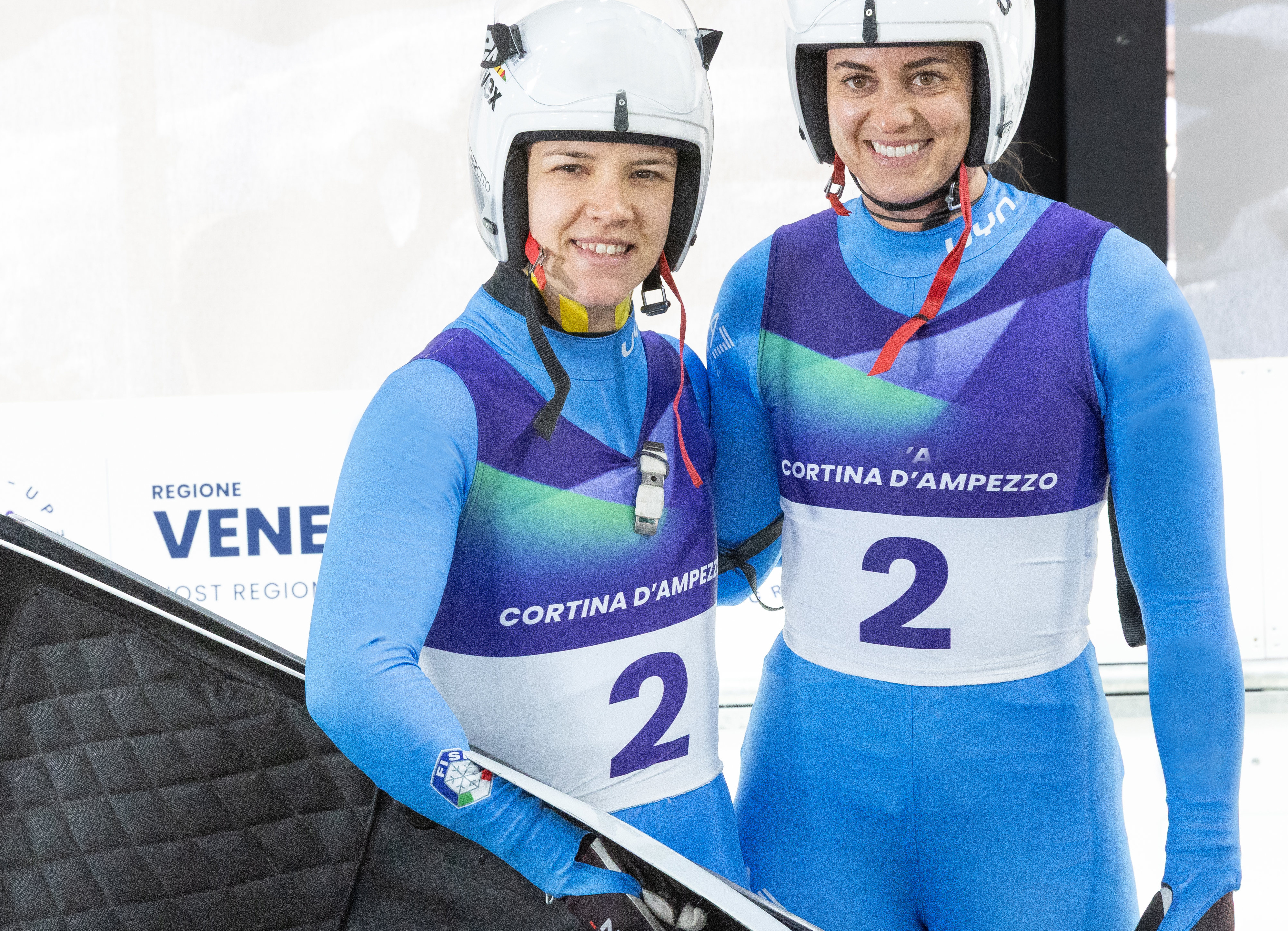
Marion Oberhofer went straight into the ice channel. “I grew up in Meransen,” she says, “where there is a small starting facility that we were allowed to use in physical education classes at elementary school.” Because she enjoyed it, she stuck with it. She was then sponsored by Gerda Weißensteiner. The 1994 Olympic champion and long-time youth coach in South Tyrol first took her to training in Imst (Austria) and later to many other tracks.
Vötter/Oberhofer are always among the fastest at the start. However, they often lose time during the runs. “Our position on the sled is our weakness,” says Vötter, “our heads are not always as flat as they should be.” Oberhofer has confidence in the pilot. “On the whole, Andrea can see where we're going,” says the underwoman, adding with a grin, “but trust is good, sometimes control is better.” After all, she is the one who has direct contact with the sled.
As well as Andrea Vötter and Marion Oberhofer harmonize on the sled, outside the luge universe the two women do nothing together. Vötter, who lives with her partner Kevin Fischnaller in Meransen, enjoys meeting up with friends, climbing the peaks of the Dolomites in summer, and, when she has time, working as a ski instructor for her godchildren. She also likes to play tennis. That's where Oberhofer comes back into the picture. “Andrea got me into tennis,” she reveals
While the Olympic Games in Cortina are Andrea Vötter's fourth appearance, it is Marion Oberhofer's Olympic debut. She has resolved to “not be too nervous and to complete two good runs.” Vötter's approach is somewhat more serene: "Of course, there is pressure at the home Olympics, but it's also something wonderful.
We want to give 100 percent so that we have nothing to reproach ourselves for afterwards.“ Unterfrau Oberhofer has one wish for her partner: ”Andrea has slowly reached a point where she is already thinking about the end of her career. That's why she should just enjoy everything."
The two have set themselves the goal of winning a medal. With the momentum from the additional training runs this winter, this is not an unrealistic goal.