




Between Science, Competitive Practice, and Olympic Responsibility
Wu Dawei – a Chinese luge pioneer at the heart of the Olympic Winter Games Milano Cortina 2026

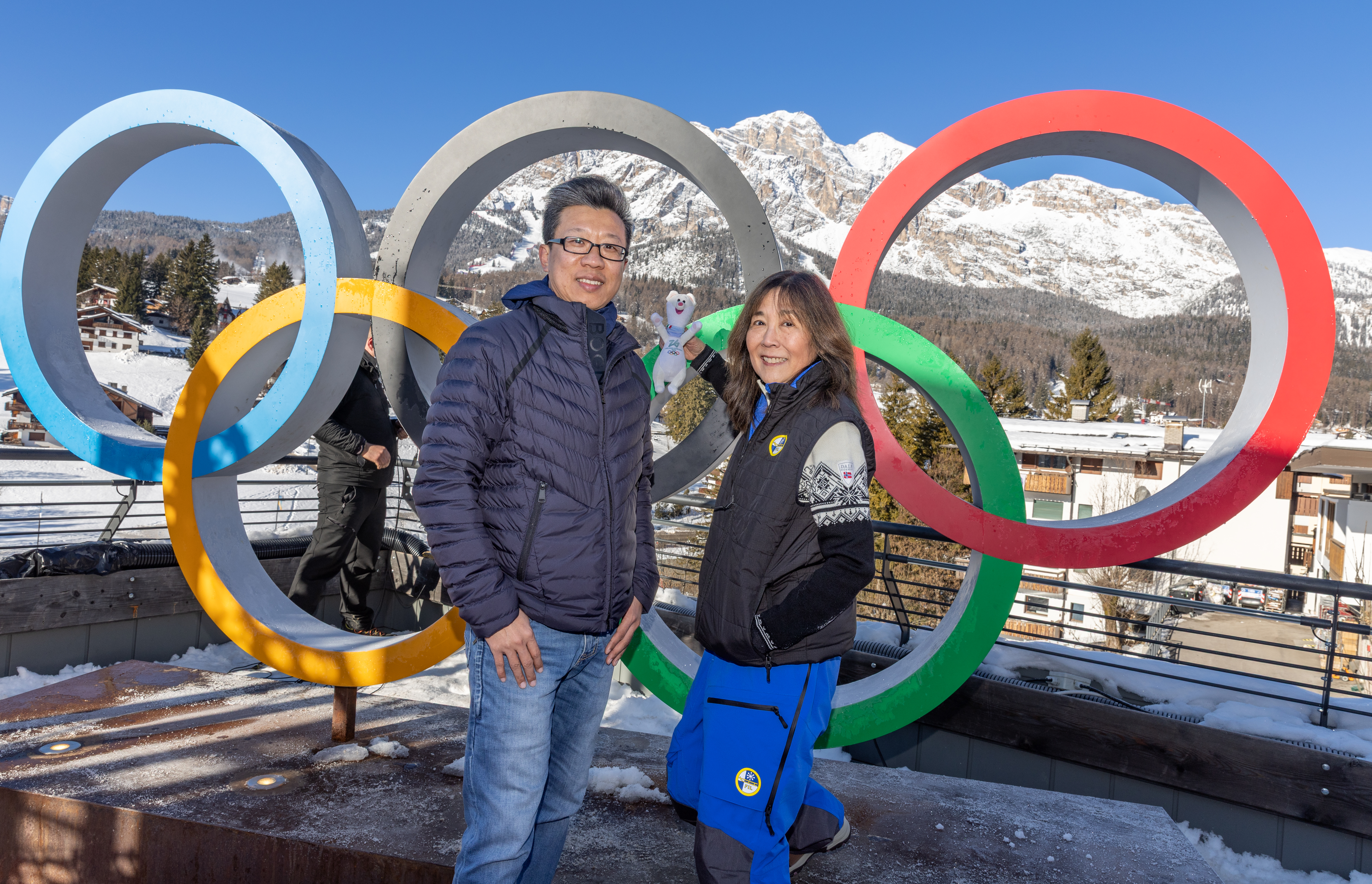
Cortina (FIL/15 Feb 2026) The world's best lugers competed for Olympic medals in Cortina d'Ampezzo from February 7 to 12, and Professor Wu Dawei was not in the spotlight – the athletes were. However, the jury and technical delegates bear significant responsibility for ensuring fairness, transparency, and smooth operations. As a member of the jury of the International Luge Federation (FIL), Wu uniquely combines scientific expertise, practical coaching experience, and international sports administration.
From the lecture hall to the ice track
Wu Dawei works at Harbin Sport University, China's most renowned university for winter sports. As a professor and doctor of sports science, he teaches training theory, performance diagnostics, and the use of big data, machine learning, and AI in high-performance sports, among other subjects. His academic background continues to shape his analytical view of luge racing. However, his journey onto the ice did not begin in the laboratory, but in practice: since 2015, Wu has played a key role as a coach in establishing China's first national luge team. The ambitious goal – to qualify in four disciplines for the 2022 Winter Olympics – was achieved. This was a historic step for a country that was late to take up luge.
Beijing 2022 as a key experience
After his coaching career, Wu moved into the organizational structures of the Olympic Winter Games Beijing 2022. As deputy sports manager and race director, he gained comprehensive insights into the operational processes of Olympic competitions: from interdisciplinary coordination and the rules and regulations to the clearly defined responsibilities within the FIL structures.
This experience, complemented by his previous work in international development programs such as the FIL Asian Development Camp in Nagano, now forms the foundation of his work as a technical official and jury member.
Guardian of fairness and precision
At international competitions, including the Olympic test event and the 2026 Winter Olympics in Milano Cortina, the jury is the highest authority present on site. Wu Dawei monitors the processes in the finish area and at the men's start in particular, coordinates critical processes, and is responsible for the touchpad in the team relay. “The start process, finish control, and clear communication with the sports director, technical director, and race director are crucial,” Wu emphasizes. Equally important is the international composition of the jury: officials from different continents send a visible signal of neutrality, strengthen the trust of all nations, and enrich decisions with diverse perspectives.
Youth development as a project for the future
Parallel to his international duties, Wu is promoting the development of luge in China. After Beijing 2022, numerous provinces – from Beijing to Shandong to Guangdong and Xinjiang – launched their own youth programs. Talented athletes aged 11 to 14 are selected in trial camps based on their performance on roller sleds, athletic ability, motivation, and interest.
Particularly successful athletes are invited to central training camps, including their first experiences on the ice track. Wu sees the fact that cities in southern China are now also launching luge initiatives as a strong signal for nationwide development. Former Olympic athletes are taking on coaching roles and passing on their knowledge to the next generation. One name exemplifies this upswing: Wang Qingxiu, who qualified for the 2024 Youth Olympic Games in a short period of time and most recently won the Asian Championships in PyeongChang.
International cooperation as the key
Wu is realistic: China started luge later than Europe, Japan, or Korea. This makes international cooperation all the more important. With the support of the FIL, he is planning more intensive training camps, coach exchange programs, and knowledge transfer to China in the coming years. As a national winter sports academy, Harbin Sport University could play a central role in this by inviting international coaches, sledding experts, and sports managers.
Cortina: Tradition meets futur
The new track in Cortina d'Ampezzo has made a deep impression on Wu Dawei. “It is beautiful and rich in history, dating back to the 1956 Winter Olympics. Each curve not only has a number, but also a name and its own story.” For him, Cortina is a symbol of how tradition and modernity come together in ice channel sports.
A message to the next generation
His advice to young athletes in China is clear and personal: “Stay true to your original goals, pursue your dreams, and keep surpassing yourselves—you are the champions of your own lives.”
Personalities like Wu Dawei show that luge has long been more than just a European core project. Milano Cortina 2026 is not just about competing for medals—it's also about working toward a truly global future for the sport.
Many thanks to Professor Wu Dawei and all FIL officials and NOTs for their fantastic support and voluntary work!