





FIL Commissions Meet Primarily Online
Less Travel, Less CO₂: FIL Embraces Virtual Meetings
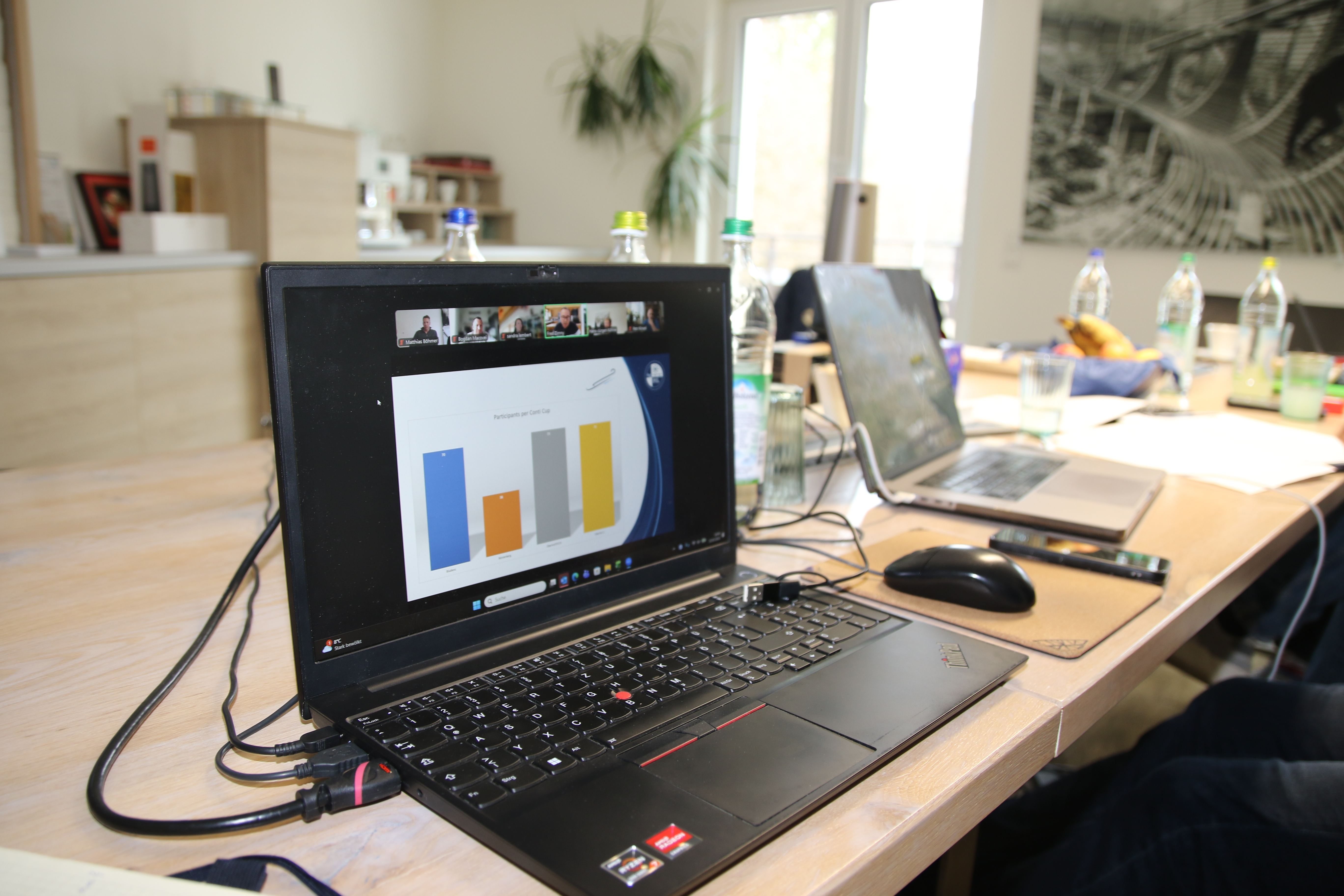
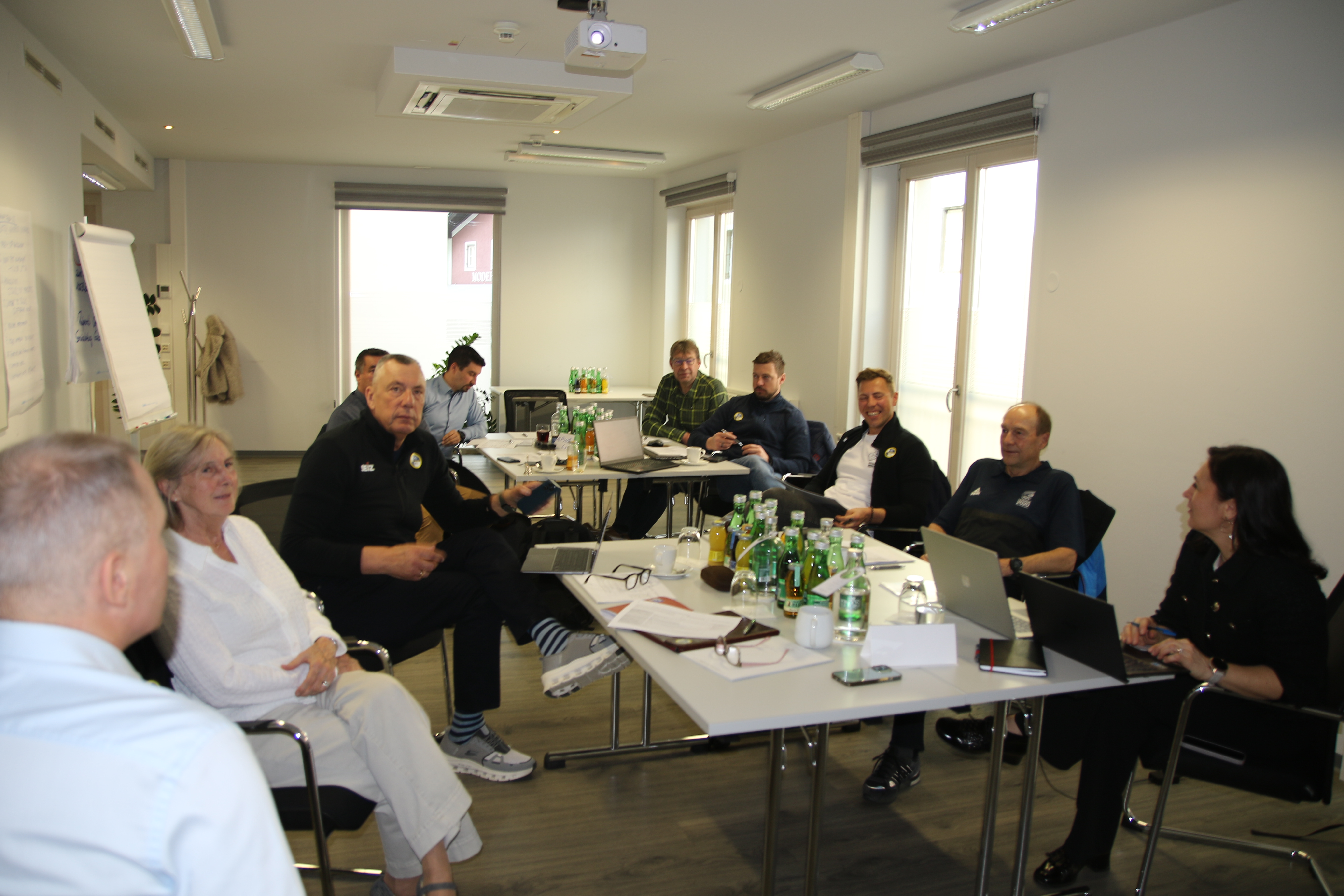
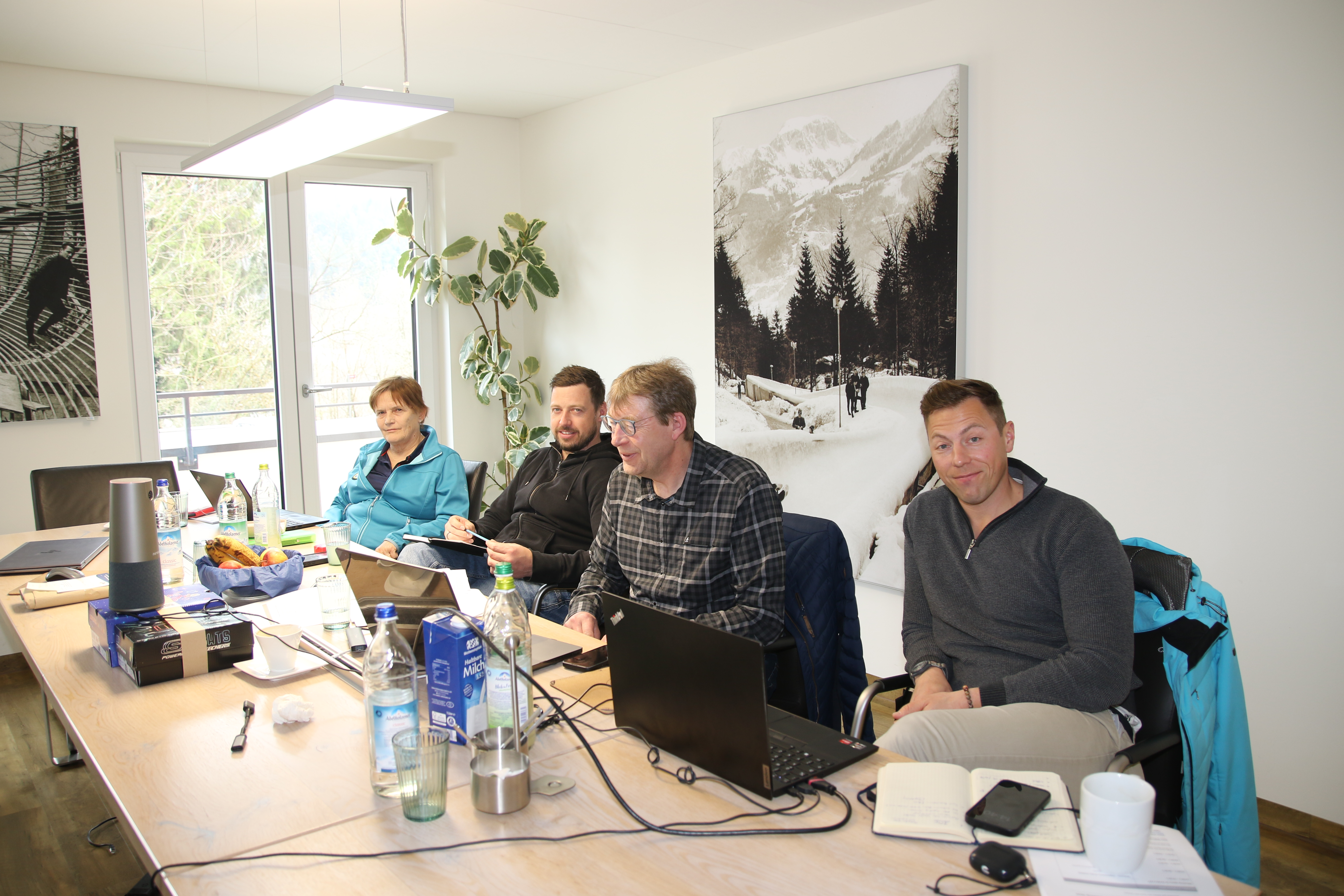
Berchtesgaden (FIL/27 Mar 2026) From Monday, March 23, to Thursday, March 26, 2026, the annual meetings of several FIL commissions took place. Representatives of the Youth and Development Commission, the Sport Commission for Artificial and Natural Tracks, and the Technical Commission gathered partly virtually and partly in person in Berchtesgaden (GER) to analyze the 2025/2026 season and discuss key issues for the further development of international luge.
The FIL commission meetings were held primarily virtually — a deliberate step taken to reduce CO₂ emissions by minimizing international travel by officials.
The multi-day meetings focused, among other things, on planning the upcoming racing seasons, the further development of youth programs, strategic questions regarding competition formats, and numerous proposed amendments to the International Luge Regulations (IRO). The deliberations serve as an important foundation for the sporting, technical, and organizational development of luge in international competition.
Preparation for the 2026 FIL Congress / IRO Amendments
In the run-up to the 74th FIL Congress, which will take place on June 8 and 9, 2026, in Berchtesgaden, 35 proposals to amend the International Luge Regulations (IRO) for artificial track luge are on the agenda. The proposals were submitted by the FIL Sports Commission, the Technical Commission, and several national federations and aim to further develop existing regulations, formulate them more precisely, and continuously improve international racing operations.
The submitted motions cover a wide range of topics. These include, among other things, adjustments to the Olympic rules, clearer guidelines for training opportunities on Olympic tracks, and more precise definitions for awarding titles at the Olympic Games. The goal is to establish clear framework conditions for future Games and ensure fair competition for all nations. In June 2026, the planned disciplines for the 2030 Winter Olympics in the French Alps will be announced.
FIL Technical Director for Slalom Matthias Böhmer explained: “The focus was on various adjustments to the Olympic rules based on the experiences gained from the past Olympic Games in Milano-Cortina. In addition, other proposals were discussed, including the introduction of an additional starting spot for the host nation at a World Cup event, as well as a wildcard for the Junior World Champion in each individual discipline to compete in the World Cup Final. In addition, a new race format for the World Cup titled “Super Slide Mode” was developed, which could be used for the first time in the World Cup during the upcoming season. To complement this, several editorial changes were made to the international regulations to avoid multiple interpretations of individual provisions in the future.”
Technical and organizational issues are also a focus of the planned changes. These include, among other things, more precise specifications for timing systems, starting procedures, and the presentation of results, such as through additional categories for disqualifications or clear rules regarding the annulment of track and start records in the event of rule violations. In addition, available timing data is to be made more accessible for teams’ performance analysis in the future.
The submitted proposals will first be discussed in the relevant FIL committees and then put to a vote at the FIL Congress. With the planned adjustments, the IRO is intended to continue serving as a reliable foundation for fair, transparent, and modern international racing.
FIL Sports Commission Meeting Held Online
The members of the Sports Commission opened their virtual deliberations with a detailed review of the 2025/2026 Olympic season, which was led by Track Sports Director Matthias Böhmer as a lively and interactive discussion. Key sporting developments were analyzed, as were organizational experiences from the season. In addition, Böhmer provided an update on a meeting held on Tuesday, March 24, regarding the new FIL strategy “We Slide forward to 2030+4,” which is scheduled to be released during the FIL Congress in June 2026.
Another focus was on infrastructural and strategic developments: Böhmer reported on the planned repurposing of the Olympic track in Cortina d’Ampezzo, long-term planning for the World Cup calendar, and preparations for the 2028 Winter Youth Olympic Games. The renovation work on the 2027 World Championships track in Innsbruck-Igls and the reconstruction of the artificial ice track at Königssee, which will host the FIL World Championships in 2028, were also discussed.
There was also positive feedback regarding sustainability and logistics: The joint DHL sled and equipment transport for overseas destinations — and now, on a trial basis, for longer distances within Europe as well — was evaluated by the members of the Sports Commission as environmentally friendly and organizationally efficient. The model is therefore to be maintained and further expanded in the future.
Women singles to Start from the Men's Start
Following extensive discussion, it was decided that in the future, women's singles competitors at the World Cup in Winterberg will start from the same starting height as the men's singles: Start House 1 (men's start). To allow everyone sufficient preparation time, an international training week has already been added to the annual schedule immediately prior to the World Cup.
FIL Sports Director Matthias Böhmer summarized: “Holding the Sports Commission meeting virtually has shown that we can work together very effectively even without long-distance travel. In intensive discussions, we set important directions for the future of our sport, ranging from new competition formats for the Olympic Games, World Championships, and World Cups to the further development of the doubles discipline in youth programs. At the same time, we were able to make progress on key issues such as the international race calendar, the deployment of jury members, and the bid for the 2030 Junior World Championships. The close exchange with the Youth Commission provides valuable insights for the sustainable and future-oriented development of luge.”
FIL Technical Commission for Artificial Tracks Meets in Berchtesgaden
The Technical Commission of the International Luge Federation (FIL) met on March 25 and 26, 2026, for its annual meeting in Berchtesgaden (GER). Those unable to attend in person had the opportunity to participate in the discussions virtually. Under the leadership of FIL Vice President for Technical Affairs, Armin Zöggeler, and Technical Director Andris Šics, the discussions focused on the analysis of the 2025/2026 season as well as the further development of the International Luge Regulations (IRO).
At the start of the meeting, the commission members looked back on the past season and exchanged views on sporting, organizational, and technical developments during an open feedback session.
Subsequently, a key focus was on integrating standardized drawings of single-seater sled components into the IRO text to define technical specifications even more clearly and uniformly in the future.
The majority of the two-day meeting was devoted to discussions regarding the proposed amendments to the IRO 2026 submitted by the national federations. The proposals were received by the FIL office by the deadline of February 28, 2026, and were discussed in detail by the Commission.
At the end of the meeting, the Technical Commission summarized the results and formulated recommendations for the further handling of the rule proposals within the FIL committees. The goal remains to continuously strengthen sporting fairness, safety, and technical development in international luge.
Youth Commission Kicked Off the Virtual Meetings
As early as Monday, March 23, 2026, the FIL Youth and Development Commission, chaired by Hans-Jürgen Köhne, had met virtually. The online meeting focused on a review of the 2025/2026 season as well as the further development of youth programs ranging from the Youth-A category up to the juniors. In addition, the commission members discussed preparations for the 2028 Winter Youth Olympic Games in Cortina (ITA), potential rule proposals for the 2026 IRO, and the planning of the international sports calendar for the 2026/2027 season and beyond. Another organizational focus was the selection of officials for upcoming youth events, particularly for the 2027 Junior World Championships in Winterberg.
“Even as an online meeting, the session was very constructive, and we were able to achieve positive results for the further development of youth and junior athletes,” summarized Hans-Jürgen Köhne, chairman of the FIL Youth Commission.