





Global Coaches Day: The Silent Architects of Success
Today the world celebrates the ICCE Global Coaches Day as part of the European Week of Sport 2026. It is a day for those who rarely stand in the spotlight and yet share in every victory and defeat, every triumph and every tear: the coaches.
In luge, this role is bound up with trust in a very particular way. A sled cannot be forced – it has to be felt. And those who teach that language have almost always learned it in their own bodies first.
Armin Zöggeler, two-time Olympic champion and six-time World Champion, embodies this journey like few others. After ending his career in 2014, he stayed close to the sport, initially as part of the technical team of the Italian federation FISI. At the 2026 Olympics in Cortina, a circle closed that almost sounds too good to be true. As coach, he stood at the track when Andrea Vötter and Marion Oberhofer won gold in the women's doubles. He did not keep his experience to himself – he passed it on, until it became golden again in the hands of a new generation.
Norbert Huber, himself an eight-time overall World Cup winner in doubles during the 1980s, has taken his journey far beyond his own homeland. He now coaches the Chinese national team as head coach. A luge pioneer from the European ice channels is accompanying athletes far from the sport's traditional heartlands.
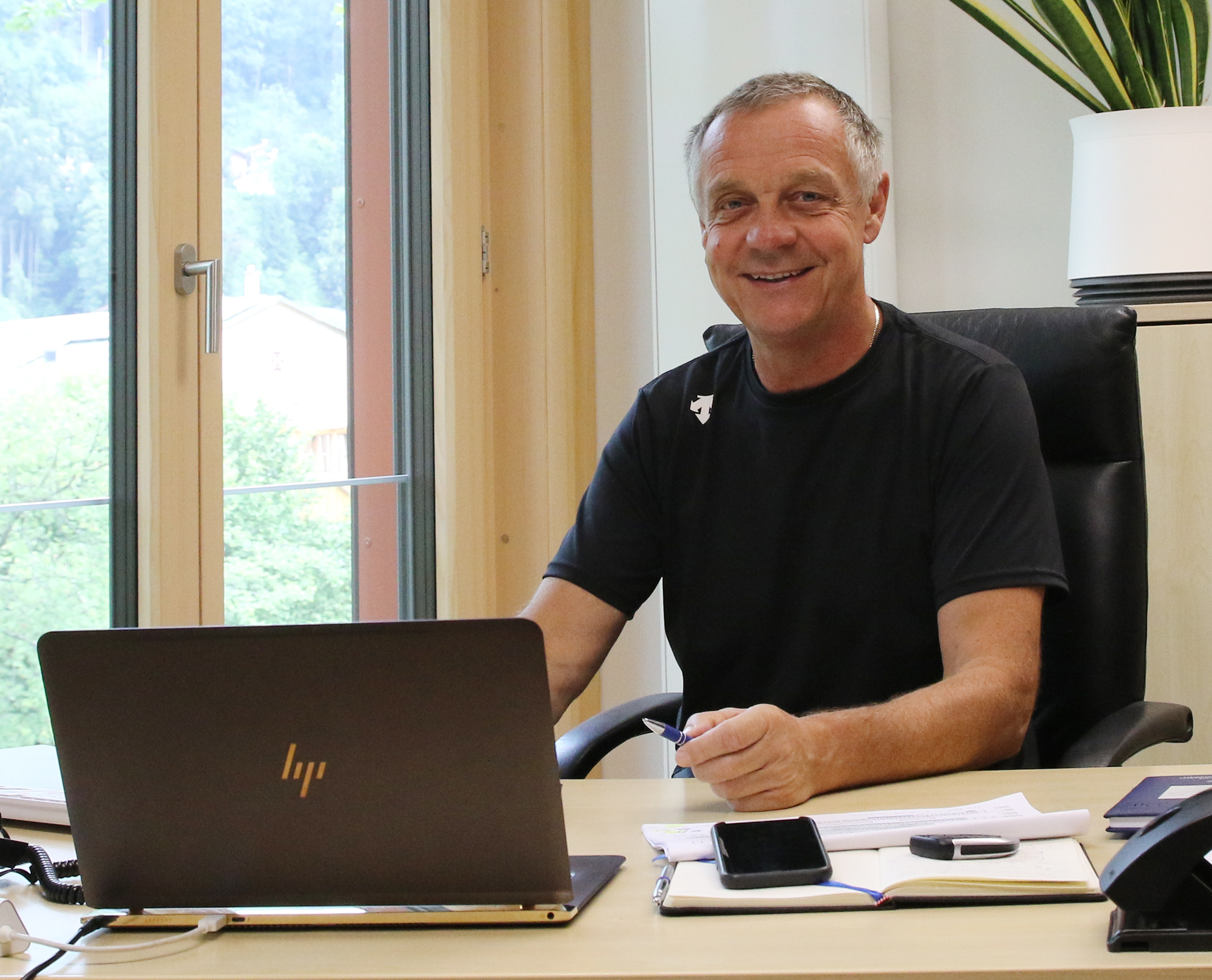
Then there is the story of Norbert and Felix Loch – father and son, united through sport. Norbert Loch (pictured) was a luger himself, competing at the 1984 Olympics, before becoming a coach. His son Felix grew up alongside the ice channel and became the most successful luger of his generation: three Olympic gold medals, 14 World Championship titles, eight overall World Cup wins. That behind this life's work stood a father who knew his son like no one else – that is one of the quiet stories of luge. But to reduce Norbert Loch to his work with his son would be to sell him short: Tobias Wendl, Tobias Arlt and Natalie Geisenberger all passed through his school as well.
Yet coaches are no longer simply technicians of cornering and start technique. Their influence increasingly reaches into other essential areas. Julia Taubitz, Germany's Olympic champion in Cortina 2026, spoke openly about the many days of grief and doubt she lived through after the disappointment of Beijing 2022. She began working with a mental coach. Four years later, she stood on the top step of the podium in Cortina with tears of joy.
That is the quiet, often invisible work behind every great moment. It is not only about making the sled faster – it is about making the person lying on it stronger. A crash at 130 km/h, a technical error in the decisive run, the fear of one's own past – none of that can be overcome by technique alone. It takes someone who is there when the doubt is greatest.
It is worth taking a moment to stop and ask: who shaped us – not only as athletes, but as people? Who, after a crash, asked first not about the time but about how we were feeling? The ICCE invites everyone to thank exactly that person with the hashtag #ThanksCoach. In luge, where trust decides in fractions of a second, that gratitude carries a particular weight.