





Home Games For South Tyrolean Lugers
Luge At The Olympic Winter Games Milano Cortina 2026

Cortina (FIL/27 Jan 2026) Italy can look back on a successful track record in luge at the Olympic Games. The statistics show seven gold medals, four silver medals, and seven bronze medals. This puts Italy in second place behind the dominant German lugers (38/36/23) and ahead of Austria (6/10/9). All of the medal winners came from South Tyrol.
Whether this ranking will still hold true after the Games in Milan and Cortina d'Ampezzo is rather questionable. The strength of the Austrian team suggests that they will overtake Team Italia. “Two medals are our goal,” says Armin Zöggeler, technical director of the Italian luge team.
During his active career, the 52-year-old made a significant contribution to this record. He competed in the Olympic Games six times, bringing home a medal each time: he was Olympic champion twice (in Salt Lake City in 2002 and Turin in 2006) and won a silver medal at the 1998 Games in Nagano. This collection is complemented by three bronze medals in 1994, 2010, and 2014. His Olympic successes, plus ten overall World Cup victories and six world championship titles, catapulted the luger into the ranks of Italy's greatest winter athletes. He was inducted into the FIL Hall of Fame in 2019.
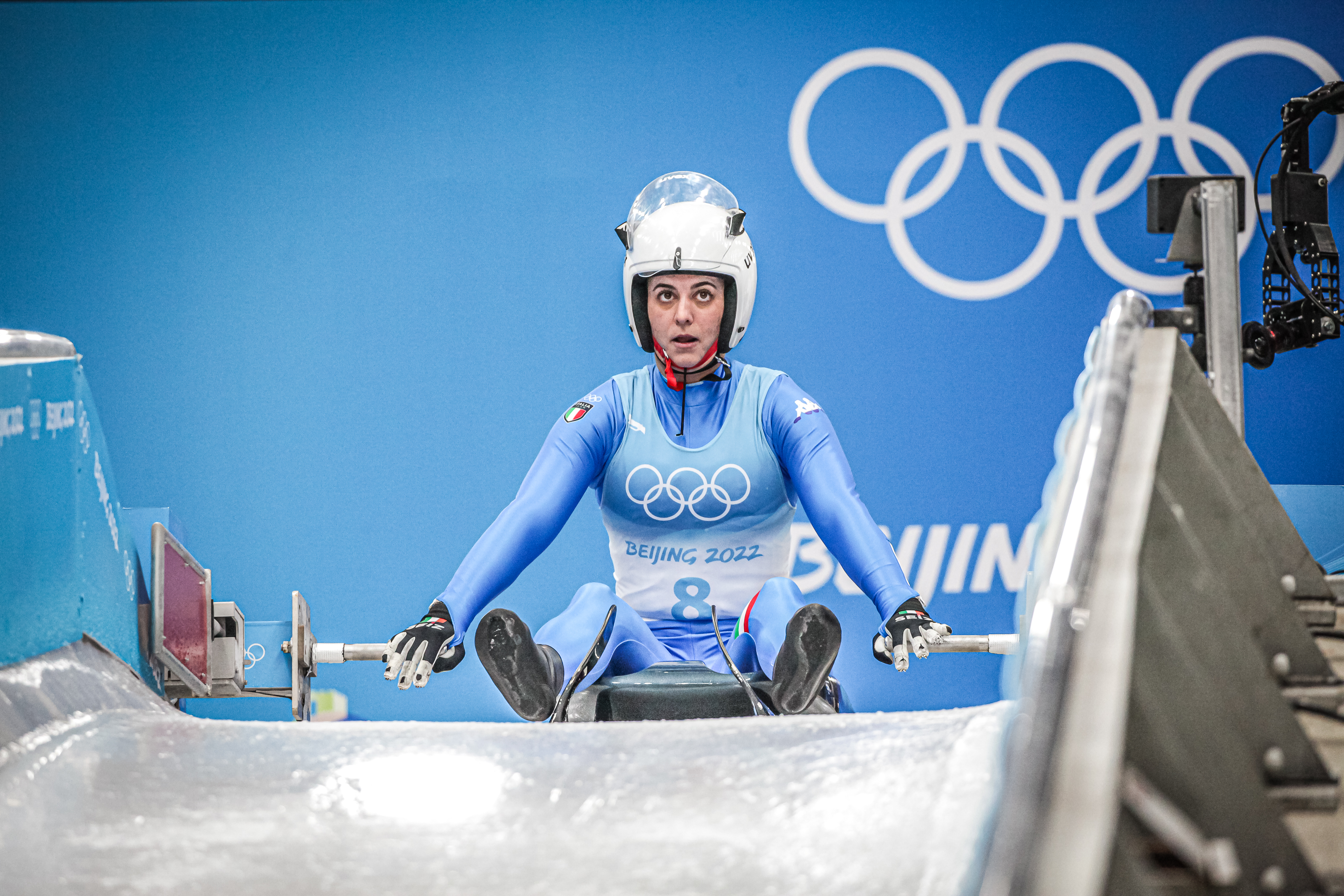
Gerda Weißensteiner became Olympic champion in Lillehammer. After Erica Lechner, who won in Grenoble in 1968, she was only the second Italian woman ever to become an Olympic champion in luge. And the 57-year-old is still the last winner to date who did not come from Germany. For the athlete, who won bronze in bobsleigh in 2006, this success still borders on a miracle. “I had to contend with every handicap imaginable,” she says in retrospect. At 64 kilograms, she was very light, which is why she was allowed to ‘load’ 14 kilograms of additional weight. “And we didn't have a track to train on.” They were constantly traveling around: Innsbruck-Igls, Königssee, Oberhof, and Altenberg.
Hansjörg Raffl became world champion in Calgary in 1990 with his long-time partner Norbert Huber. The duo then won two Olympic medals – bronze in Albertville in 1992 and silver two years later in Lillehammer. Kurt Brugger and Wilfried Huber finished ahead of them. So Italy took gold and silver in the doubles in Lillehammer in 1994.
The successes of another doubles specialist are legendary. Paul Hiltgartner won gold in Sapporo in 1972 with his partner Walter Plaikner. Together with the GDR duo Horst Hörlein and Reinhard Bredow, they stood on the top step of the podium. Both doubles teams clocked a time of 1:28.35 minutes in the two runs. With the thousandths of a second that are measured today, a double victory is hardly conceivable. Three-time World Cup winner Ernst Haspinger, world champion in 1971 and three-time World Cup winner, also had a significant impact on the history of luge in Italy.
Their various careers did not begin on the ice track, but on the natural track luge. Or Alpine Luge, as it is now called. “Sledding has a long tradition in South Tyrol,” explains Weißensteiner, “in the past, it was used to transport hay and tree trunks down to the valley, and only later did it become a leisure activity. It wasn't just Weißensteiner and his South Tyrolean luge colleagues from the 20th century who started their careers this way. “Many athletes still come from natural track luge,” explains Zöggeler, “many then switch at the age of 13 or 14.” This was also the case for Dominik Fischnaller, overall World Cup winner in 2022/23, and the other current Italian medal hopefuls for Milan Cortina 2026.
“It's important that the Olympic Games are taking place in Cortina,” says sports official Armin Zöggeler, “but it's even more important that the track has been rebuilt and that we can compete internationally.” Gerda Weißensteiner has also contributed to this over the past 20 years as a youth coach. Even without a track, she proudly announces, she has always found many young athletes. And then she names three: Marion Oberhofer, Verena Hofer, and Dominik Fischnaller. This trio will represent Italy in Cortina and try to improve South Tyrol's record.