





Kristers Aparjods grew up on the ice track
He will compete in his third Winter Olympics in Milano Cortina 2026

Berchtesgaden (FIL/27 Jan 2026) Kristers Aparjods is disarmingly honest. “My sister and I had no other choice but to go luge,” says the 27-year-old Latvian. Their mother, Aiva Aparjode, herself a former luger and Olympic competitor, always took her children Kendija and Kristers with her to the ice track in Sigulda when she went there. And they were there very often. “She put us on the sled, pushed us off and said, ‘Good luck,’” her son recalls of his early days. He was nine years old at the time. As the gold medalist at the 2016 Youth Olympic Games in Lillehammer, he made his World Cup debut in Winterberg the following season. He claimed his first victory in the 2020/21 season in Sochi. He now has five victories to his name, three of which were achieved in his home town of Sigulda.
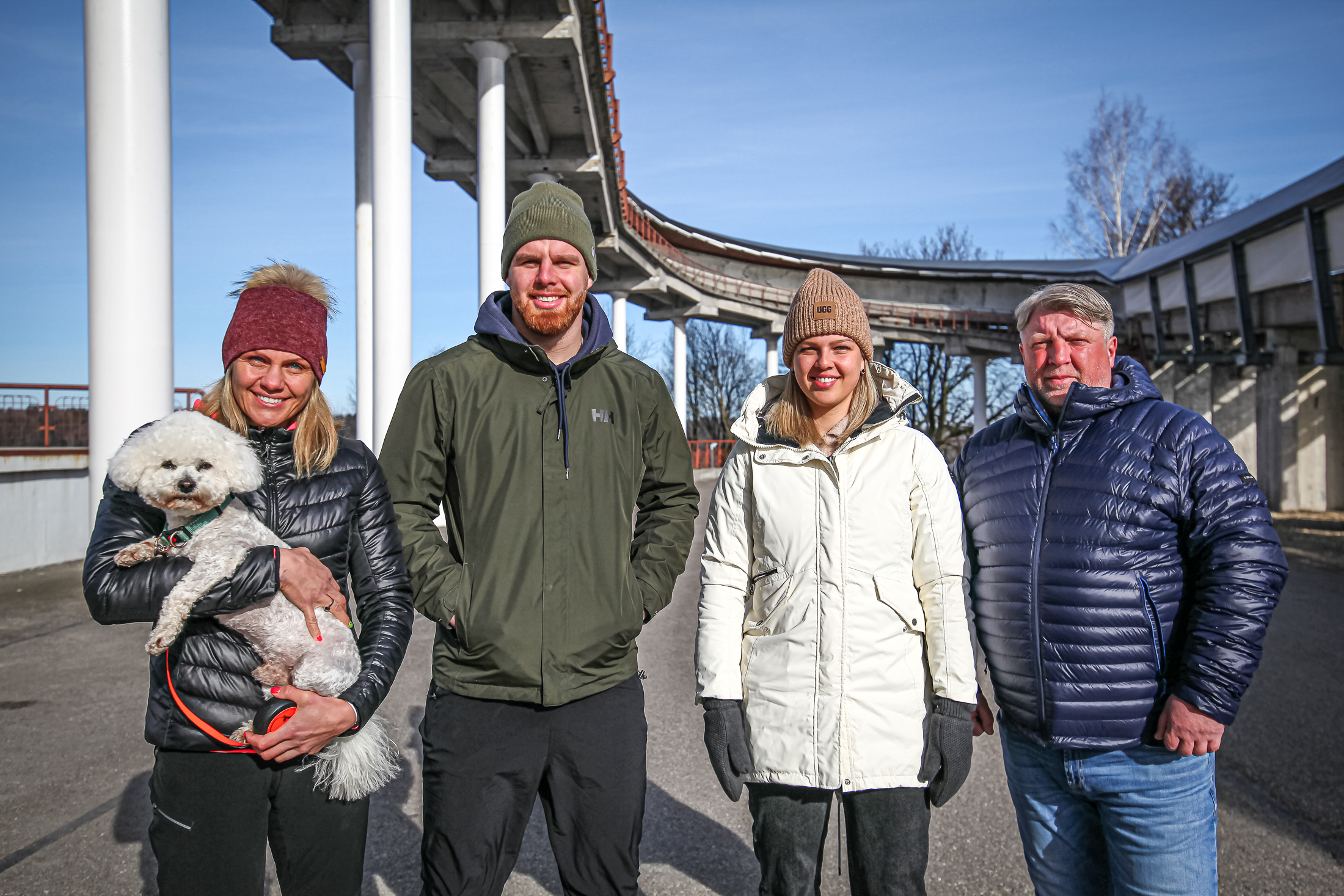
Kristes Aparjods really appreciates being able to travel from station to station in the World Cup together with his sister Kendija, who is two years older than him. “It's really nice that we can both compete on this stage and support each other,” says the 1.95-meter-tall giant. And he admits: “When the other one is racing, we are more nervous than when we are racing ourselves.” In this respect, the Aparjods are similar to Svante and Tove Kohala, the other (mixed) sibling pair from Sweden. This makes the joy all the greater when they can clinch victory together in the team relay, as they did most recently in Altenberg in January 2025.
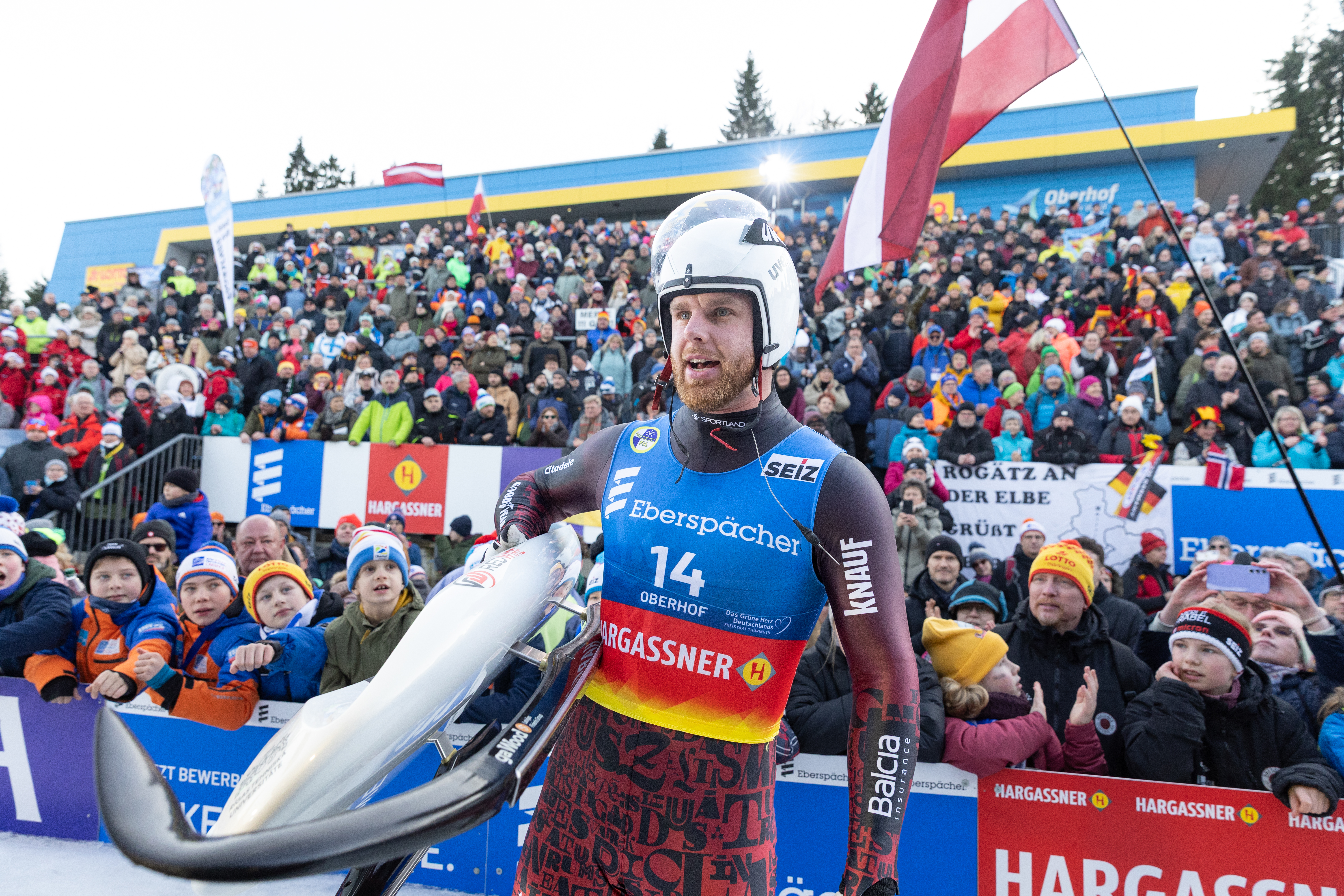
The Games in Cortina d'Ampezzo will be Kristers Aparjods' third appearance. On the one hand, he is looking forward to the races at the Cortina Sliding Center. “The Olympic Games are completely different from a World Cup,” he says. “It's not always the person who appears to be the favorite in the run-up who wins.” He considers the circle of medal contenders to be quite large: Germany's Felix Loch and Max Langenhan, Austria's Jonas Müller, Nico Gleirscher, and Wolfgang Kindl, and Italy's Dominik Fischnaller and Leon Felderer. And Kristers Aparjods? “A medal would be great,” he says. But, and Kristers Aparjods has great respect for this, the Olympic decision is made in four runs and not two, as in the World Cup. “Four runs are twice as many, two good races mean nothing,” he explains, “and the night does something to you.” It's important to stay calm. Just like when he's fishing, his hobby.
At least Kristers Aparjods likes the 1,749-meter-long ice track in Cortina. “Basically, the Olympic track in Cortina is easy,” he explains, “but sometimes it's hard to find the right line. That's what makes it so challenging.” However, the start is crucial. “If you can get everything together, then anything is possible.” One thing is certain: his mother, Aiva Aparjode, will be wishing him luck again. But instead of pushing the sled, she will be sitting in the stands, cheering him on and keeping her fingers crossed.