






Luge Down Under: The Sport That Knows No Seasons
While Europe sweats through summer, the Southern Hemisphere is deep in winter. And somewhere down there, someone is sliding.
Here is a question for the start: who won the very first international luge race in history? The answer might surprise you.
It was February 1883. Twenty-one competitors from six nations – including the United States – lined up in the Swiss Alps for a four-kilometre race from St. Wolfgang to Klosters, organised by the hotels of Davos. The winner, crossing the finish line in exactly nine minutes and fifteen seconds, was Georg Robertson – a student from Australia. One hundred and forty-two years before anyone had heard of Alex Ferlazzo, an Australian already stood atop the luge world.
A Country Without a Single Track
Australia has never had a luge track. Not one. Athletes who want to slide in this country do not start on ice. They start on tarmac, steering wheeled sleds down public roads, learning the fundamentals of a sport that most of their compatriots have never heard of. It is an improbable way to reach the Olympics. And yet it has worked.
Diane Ogle was the first Australian to compete in Olympic luge, racing at Albertville 1992. Two years later, Roger White became the first Australian man to race luge at the Olympics, competing at Lillehammer 1994. Hannah Campbell-Pegg – today the President of Luge Australia – continued the story at Torino 2006 and Vancouver 2010.
And then came Townsville.
Alex Ferlazzo was born in a city in northern Queensland where the average temperature rarely drops below 20 degrees. He had never seen snow as a child. He had certainly never seen a luge track. And yet Ferlazzo went on to become one of the most remarkable athletes in Australian winter sports history. He made his international debut at the 2012 Innsbruck Youth Olympic Games, stepped up to the Olympic stage at Sochi 2014 at just nineteen years old, returned for Pyeongchang 2018 and Beijing 2022 – making him Australia's first-ever luge triple Winter Olympian – and competed for the fourth time at Milano-Cortina 2026. Four Olympics. From Queensland.
Remarkably, Ferlazzo first went on ice not in Australia but across the Tasman Sea, in New Zealand, in 2010. That detail says much about how luge in the Southern Hemisphere actually works – and about the man who made it possible.
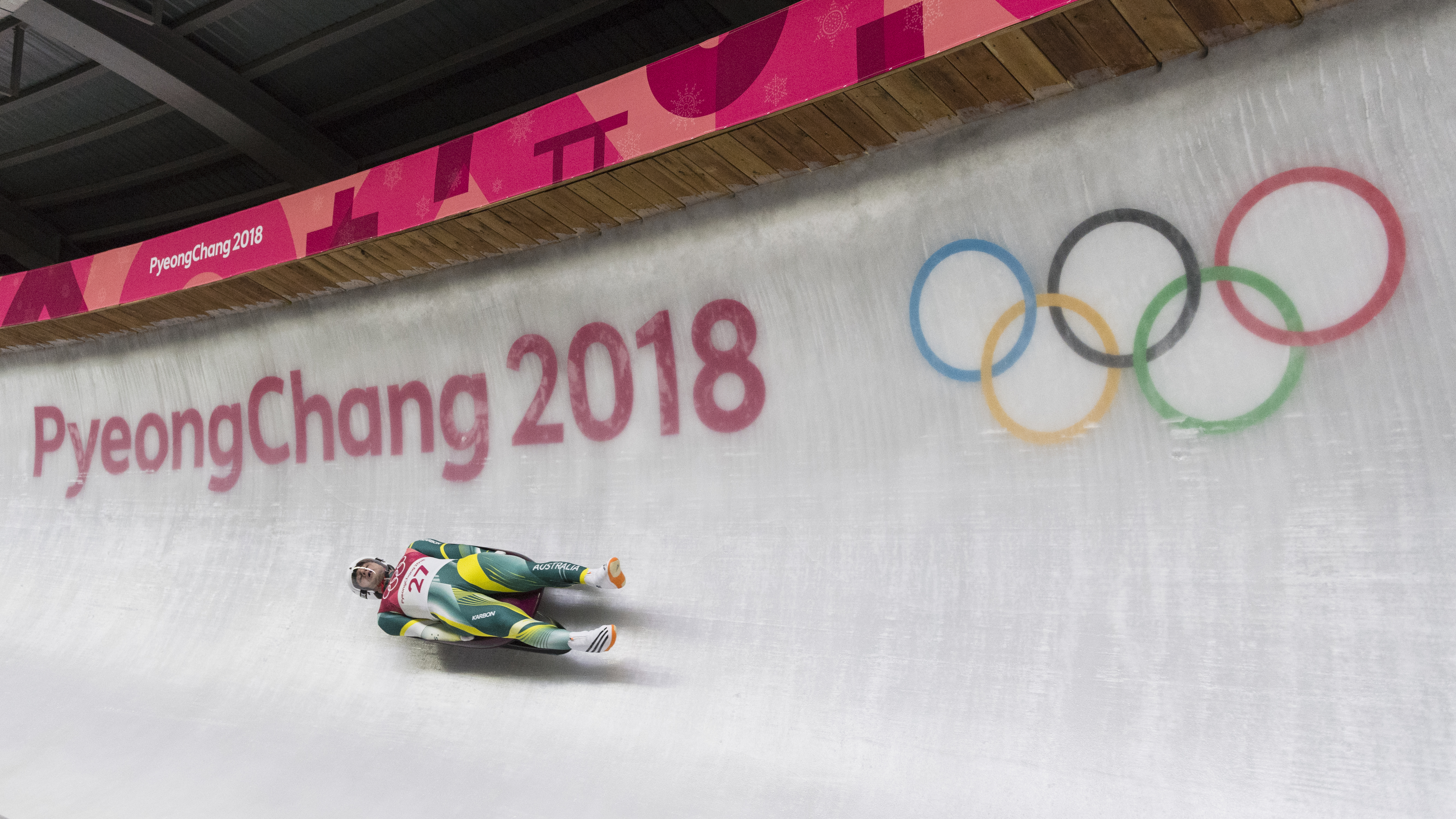
Olympian Alex Ferlazzo
One Man, a Curling Friend and €100,000
Geoff Balme discovered luge in Calgary in the 1980s, when he and two New Zealand friends living in Canada decided they would compete at the 1988 Olympic Winter Games. It did not happen. But the sport had him hooked. When Balme returned to New Zealand in 1989, he brought wheeled sleds with him, ran a programme on wheels for several years and produced athletes who competed internationally throughout the 1990s – including Angela Paul who competed at both the Nagano 1998 and Salt Lake 2002 Olympic Winter Games.
Then he realised that wheels could only take you so far. Riding a wheeled sled on a road, as Balme puts it, is a bit like riding a bike in a gymnasium – useful for learning, but not for making a road racer. An encounter with a curling friend who lived in the far south of New Zealand – where it gets cold enough for natural ice – changed everything. "You should come to Naseby sometime," the friend said. That was 2003.
It took five years. Between 2003 and 2008, Balme raised approximately €100,000 – plus goods, services and countless volunteer hours – to build a luge track in Naseby, a village of fewer than 200 people in Central Otago, some 600 metres above sea level, halfway between Dunedin and Queenstown. Track expert Josef Ploner came from Italy to help construct it. European coaches followed – including Alpine Luge World Champions Patrick Pigneter, Alex Gruber, Greta Pinggera and Olympians Guntis Rekis and Veronika Halder among them – funded by the FIL, which paid their airfares.
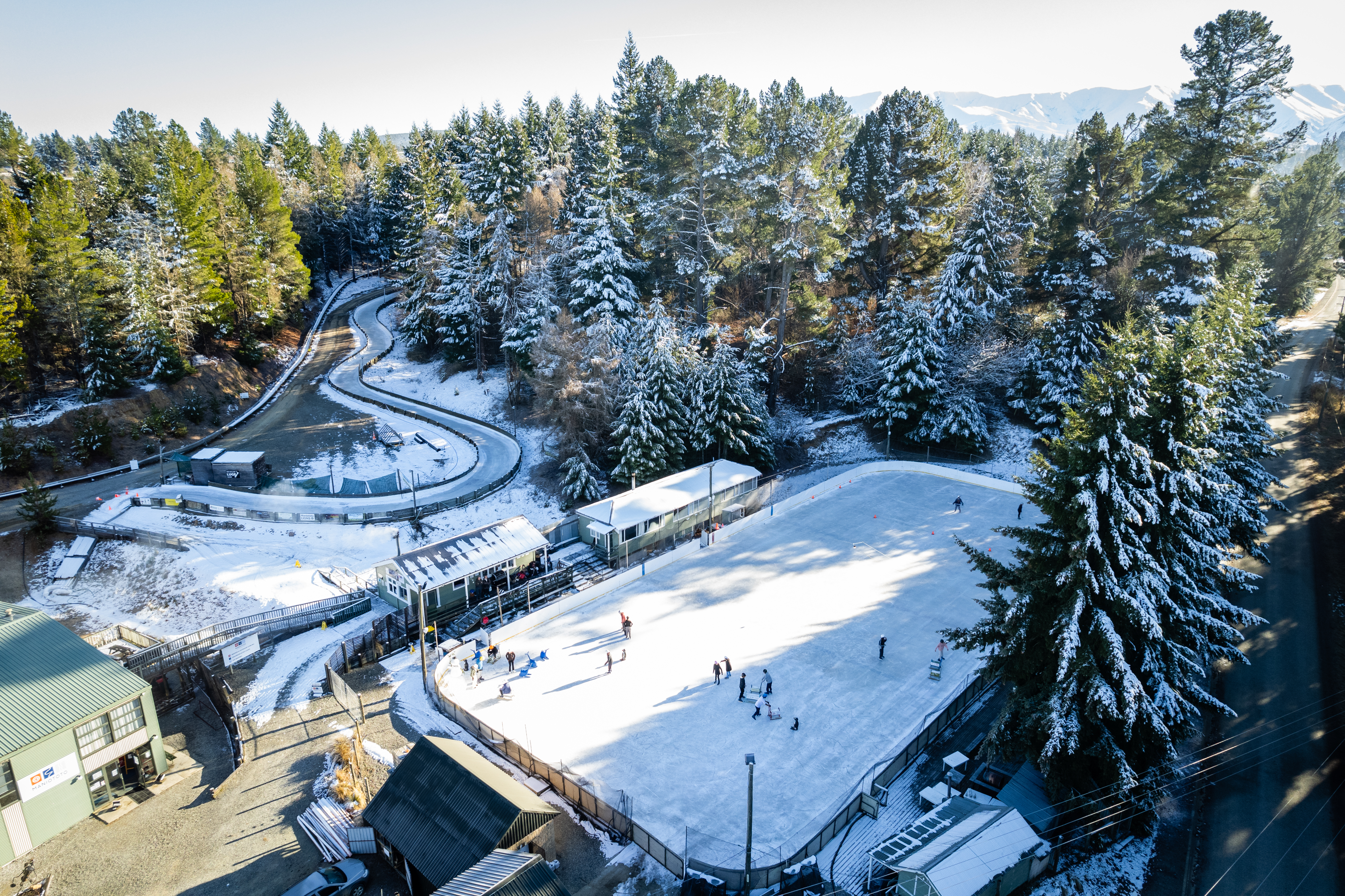
The Naseby Luge Track opened on 12 July 2008. At 360 metres long with ten curves and a refrigeration system, it became the first and only luge track in the Southern Hemisphere. For Balme, now 68, it became what he calls his "second lifestyle" – a full-day journey from his coastal home on New Zealand's North Island, made roughly six times a year.
A Track Built on Ice, Curling and Community
The results at Naseby surpassed expectations. Since 2010, fifteen New Zealand athletes have trained and competed internationally in both alpine and artificial track luge. One became an Alpine Luge Junior World Cup Champion (Jack Leslie in 2015/16). Four competed at the Winter Youth Olympic Games (Matheson Hill Innsbruck 2012, Ella Cox and Hunter Burke Lausanne 2020 and Maggie Dowling Pyeongchang 2024). The track proved its potential.
But luge in Naseby has always depended on the public as much as on competitive athletes. The revenue that keeps the lights on comes from community use – families, school holiday camps, curious visitors from Dunedin and Queenstown who want to know what it feels like to go 45 km/h or more on a sled. For years, the luge track operated independently alongside an outdoor skating rink, a curling hall and natural ice curling rinks, all on the same site.
This winter, as Balme tells it with undisguised disappointment, the track did not open. A breakdown in planning and communication between the community organisation that now runs the facilities and the volunteers critical to winter operationing meant that, for the first time, Naseby had a winter without luge. "Very disappointing," Balme says. "We are trying to understand what happened and hoping to fix it for next winter."
The season in Naseby is also getting shorter. Climate patterns mean reliable cold temperatures are harder to guarantee. Which is precisely why the next chapter of luge in New Zealand may not be written at 600 metres – but at 1,800.
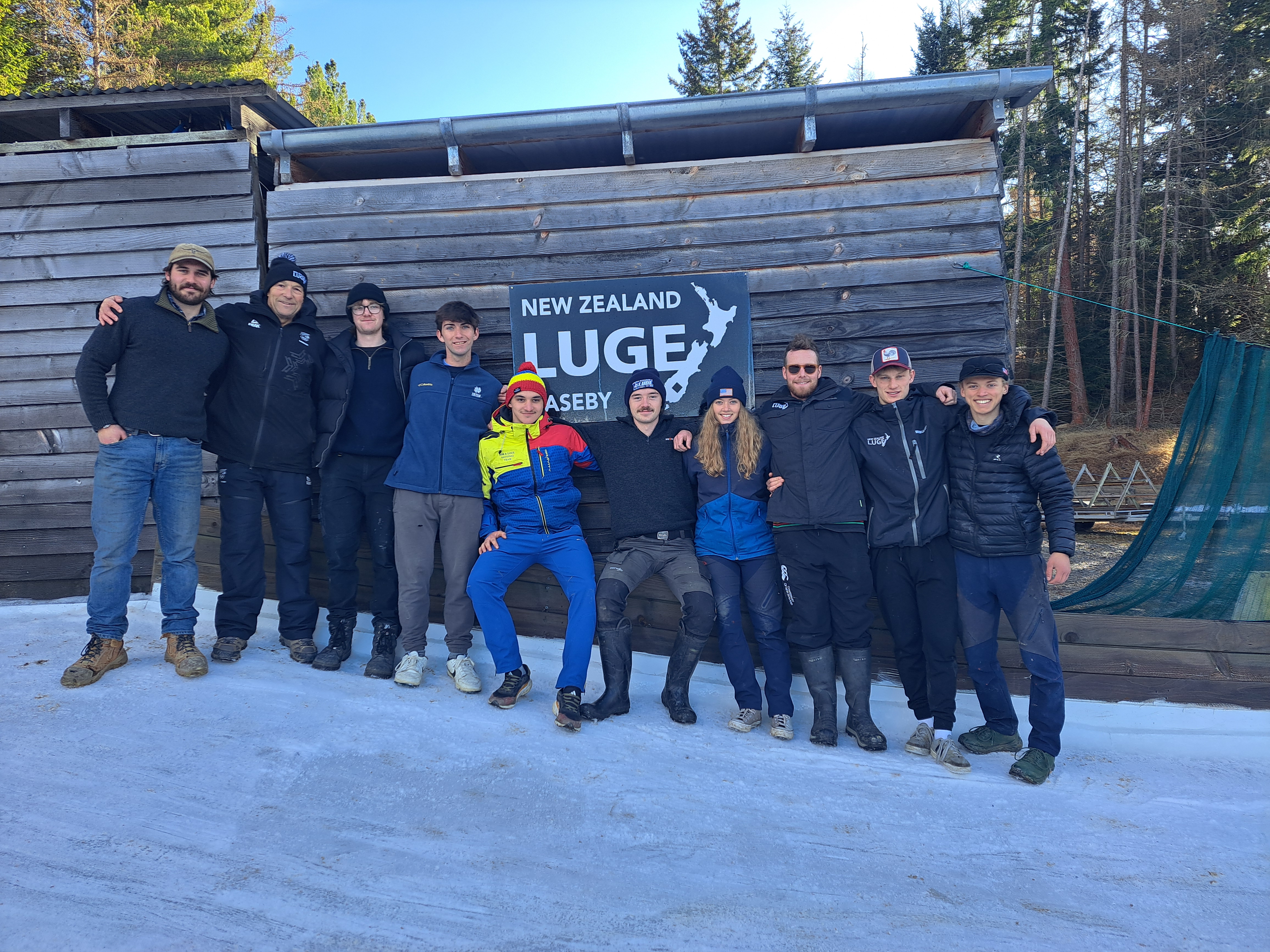
The Next Chapter: Higher, Longer, Wider
Discussions are already underway with a ski area in New Zealand about developing a luge park at 1,800 metres above sea level. The idea is straightforward: a slope, some sleds, people who come for the skiing and stay for the luge. A longer season. Higher elevation. A sport available not just to those who travel to Naseby, but to anyone who buys a ski pass.
In Australia, similar conversations are taking place. There is no luge track and no grassroots programme to speak of, but the alpine luge concept offers something that the road-and-wheel model never could: a permanent, visible, accessible point of entry for a new generation of athletes and enthusiasts. "In Australia we are keen to establish alpine luge at one of the ski areas," FIL Vice President Oceania Geoff Balme confirms.
Argentina, too, has its own history of taking sleds to ski hills – long before the FIL formalised the concept of alpine luge. Rubén Gonzales, who represented Argentina at four Olympic Games across four decades (Calgary 1988, Albertville1992, Salt Lake 2002 and Vancouver 2010), and Veronika Ravena (Pyeongchang 2018, Beijing 2022 and Milano-Cortina 2026), who has lived in Whistler most of her life, have both carried a largely diaspora-based programme. From time to time, sleds have been taken to Argentine ski hills. The potential is there. The infrastructure is not yet.
A Name Change, a South Sea Island and the Olympic Dream
The Southern Hemisphere's most improbable luge story belongs to Tonga. Fuahea Semi heard a radio advertisement about tryouts to represent his country at the Winter Olympics, decided almost immediately he had to go and ended up changing his name to Bruno Banani – matching it to that of his German underwear sponsor, as part of one of sport's most creative marketing ploys. He qualified for Sochi 2014 after finishing 28th in a race in Park City, Utah, and became Tonga's first-ever Winter Olympian. His story became a documentary film, "Being Bruno Banani – The Flying Coconut", and he is remembered as the first athlete ever to serve as a "living brand" in Olympic history.
The Work Still to Be Done
Chile. Uruguay. South Africa. Countries with mountains, with winter, with ski areas looking for new ways to attract visitors and generate revenue. Countries where, as Balme notes, nobody has yet put their hand up. The commercial logic is straightforward – ski area operators are always looking for new attractions, and a luge park offers exactly the kind of accessible adrenaline that brings people back. The FIL's alpine luge working group is developing the materials to make that case: a one- or two-page document for ski area operators, explaining what alpine luge is and a ‘playbook’ setting out what it needs and what it can deliver.
The model already exists. It works in central Europe. It is beginning to work in New Zealand and Australia. The question for the Southern Hemisphere is not whether it can work, but how quickly the conversations can move from discussion to construction.
Georg Robertson won the first luge race in 1883. One hundred and forty-two years later, the sport is still finding new ways to reach new corners of the world. Even the tropical ones.