






Preview: Olympic Test Event in Cortina / First qualifying race for Milano-Cortina 2026
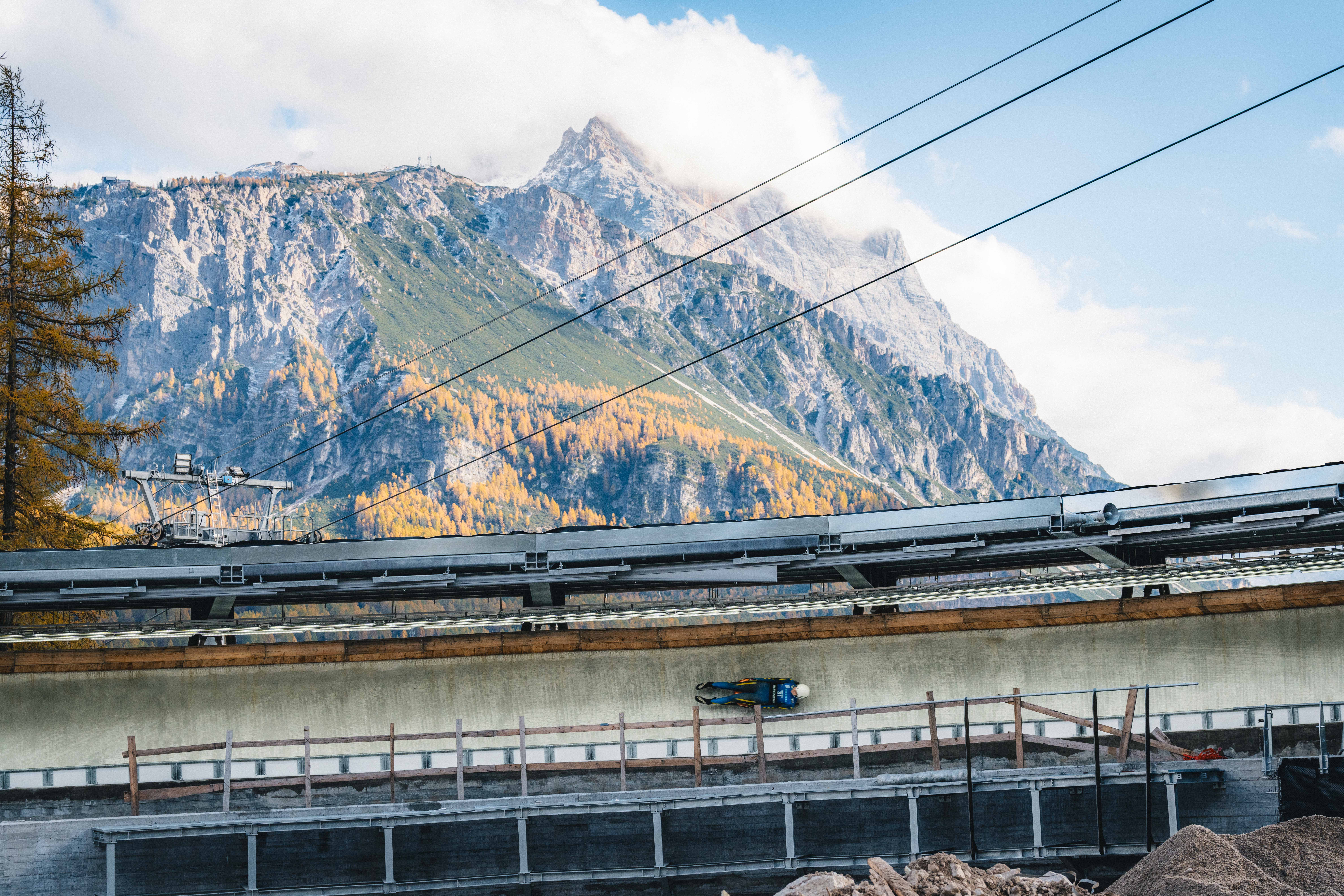
Cortina (FIL/26 Nov 2025) The Olympic Test Event in Cortina d'Ampezzo on Saturday, November 29, and Sunday, November 30, 2025, will be held as the first official qualifying race for the Olympic luge competitions in Milan-Cortina in February 2026.
The first qualifying event in accordance with Chapter G, page 7 of the current qualification system will thus take place on the new Pista Olimpica Eugenio Monti in Cortina d'Ampezzo.
Further Olympic qualifying competitions are the EBERSPÄCHER World Cups number two to five in December 2025 and January 2026 in Park City and Lake Placid (both USA), in Sigulda, Latvia, and finally in Winterberg (Germany).
The qualification criteria for luge for the 2026 Winter Olympics in Milan-Cortina can be found at the following link:
https://www.fil-luge.org/cdn/uploads/milano-cortina-2026-qualification-system-for-luge-v3.pdf
Starting on Monday, November 24, 2025, around 150 athletes from 25 nations will be training on the 1,730-meter Olympic track in Italy.
Olympic Test Event Schedule:
Saturday, November 29, 2025:
9:00 a.m. Men's and Women's Doubles, 1st Run
10:55 a.m. Men's and Women's Doubles, 2nd Run
12:35 p.m. Women's Singles, 1st Run
2:24 p.m. Women's Singles, 2nd Run
Sunday, November 30, 2025:
9:30 a.m. Men's singles, 1st run
11:20 a.m. Men's singles, 2nd run
12:55 p.m. Team relay
Subject to change!
Ahtletes’ Quotes:
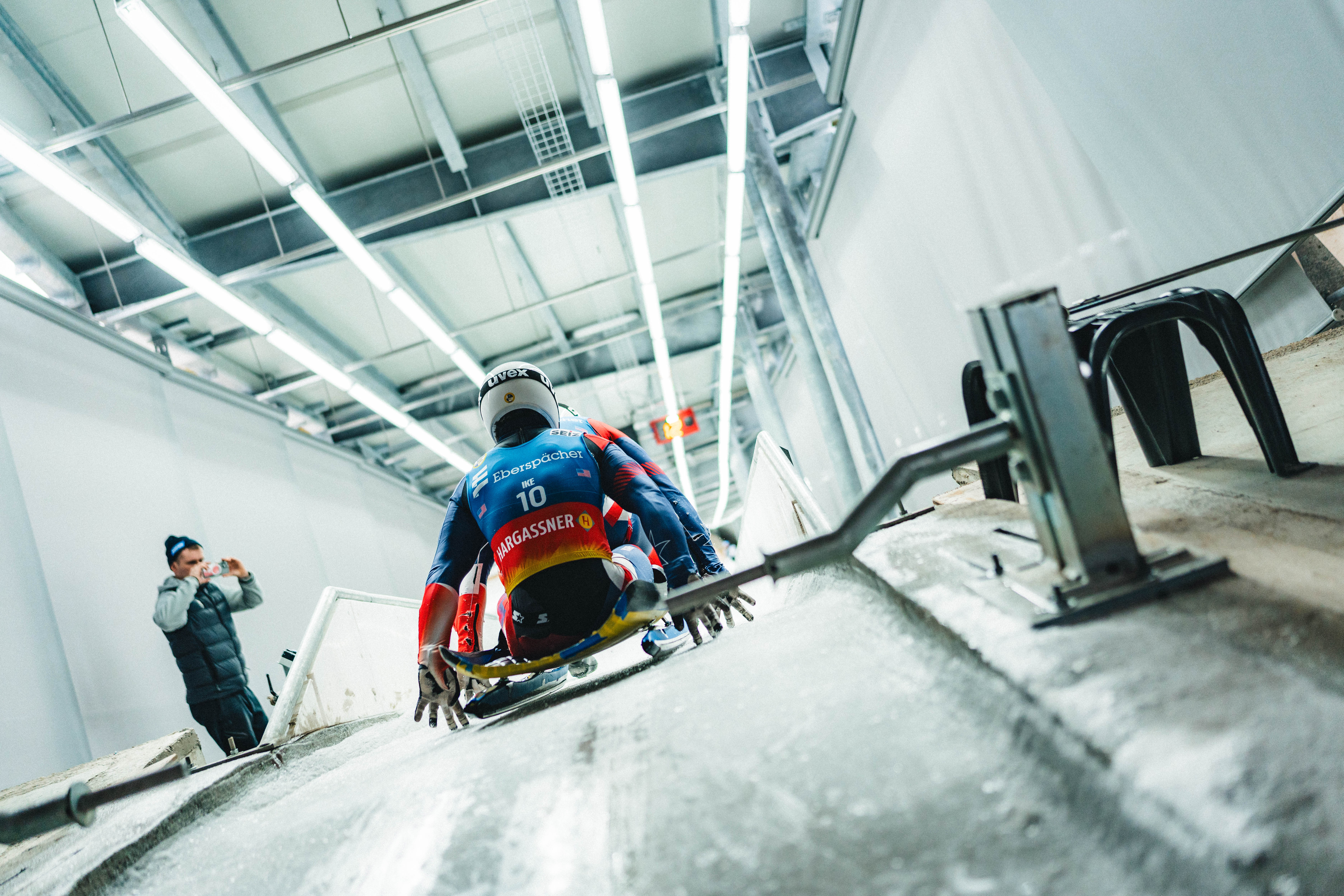
Frank Ike (USA): “Being a brand-new track it’s definitely a challenge. It’s fun getting to work together with the team to learn how to drive the best lines through!”
Sophia Kirkby (USA): "Waking up to morning cappuccinos in Italy and learning the Cortina track has been amazing. A few sections have changed since I was last here in March, which keeps it fresh and exciting. It’s a thrill knowing I’m sliding on the 2026 Olympic track—everything’s starting to feel real!"
Ashley Farquharson (USA): "The new track has been super fun and exciting to learn! It offers a unique set of challenges with long curves, lots of uphill sections, and a couple of tricky transitions. So far, I'm really enjoying the speed and the pressure and can't wait to see how all the pieces fit together."
Kristers Aparjods (LAT): "The track in Cortina is really cool—completely new and interesting. We spent the first three days getting to know the variations and character of the track, but step by step we have now set ourselves small goals for each run, improved our performance, and increased our speed—the track was easy to ski from the start and I liked it right away. The weather in Cortina is also very nice and the ice quality is stable."
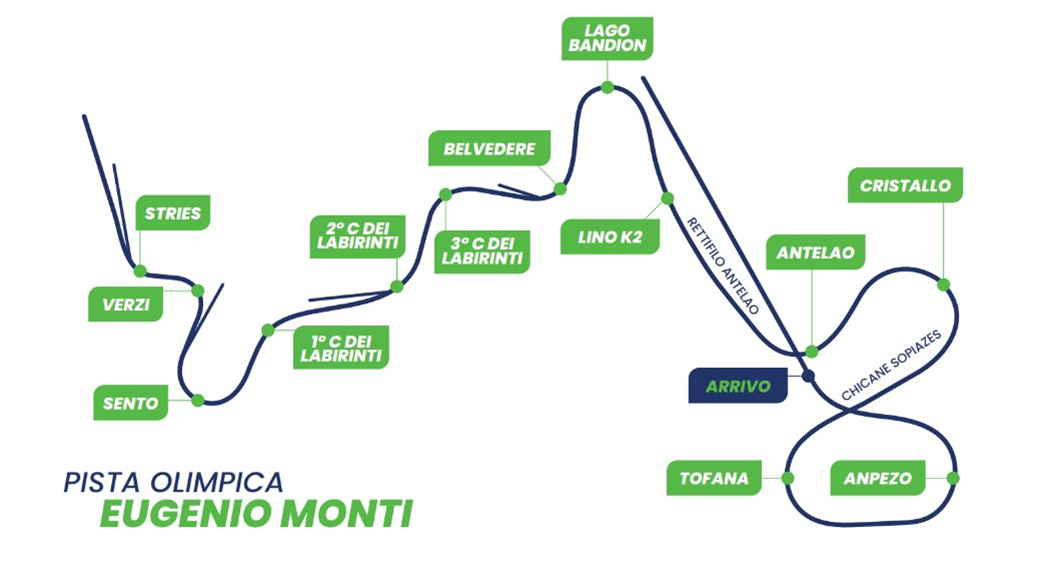
Lisa Schulte (AUT): "What we saw during pre-homologation has been confirmed. Even though it doesn't feel particularly fast and you get hardly any feedback from the sled, it's basically a cool track. The upper section is fairly flat, but it does contain a few technical difficulties, such as the exit from curve four. From curve nine onwards, the gradient increases the speed, and you can really let the sled run well, especially in the large, long curves in the lower section of the track. The exit from curve eleven marks the first low point of the track, followed by a short flat section and then the first of two uphill passages with the chicane in 12/13."
Hannah Prock (AUT): "The curve profiles remind me of Asian tracks with their long entry and exit sections. Apart from curve four, the technical challenges are manageable. What you lose at the top is difficult to make up at the bottom, as it goes uphill again from transition 14-15. I think you can work your way up this track very well, I like it. “
Wolfgang Kindl (AUT): ”We heard beforehand that it was a very easy track, but I personally think it has its pitfalls. The upper section in particular is technically demanding; you have to get the line right in the first curves. There's more speed in the lower section. Here you have to stretch out really long, and the aerodynamics have to be spot on. The conditions haven't allowed for very fast runs so far, but I hope it will get faster.“
David Gleirscher (AUT): ”I struggled a bit at the beginning, but I've gotten used to the track now. It's not a high-speed track, so the challenge isn't getting down it, but pushing the limits and being fast."
Armin Frauscher (AUT): “The track is technically demanding at the start and is particularly good for gliding at the bottom. It's a modern and interesting track that is very enjoyable to race on overall. The long, pressureless curves suit us, we know what to do, now we need to push ahead with the setup and work out the ideal line.”
Julia Taubitz (GER): "I really like the track. It's very sensitive, was still a bit slow during the training week and could be a bit faster. It's very flat. Turn four is a crucial point for us, where you have to hit it well. The curve rhythm is very nice, and since the ice construction was already very good, there were hardly any bumps. We always compare it a bit to a bathtub. If you have a good rhythm, you can let the sled dance down the track. Then it's really fun. I often arrived at the finish line with a smile on my face."
Merle Fräbel (GER): "At first glance, I liked the track, but then I didn't like it so much. Turn four gave me trouble at the beginning, and the first few runs were a bit bumpy. But then I got the hang of it relatively quickly. We didn't have such a fast track at the beginning – that's always good for the start, because you think: ‘Okay, now we can go faster.’ Our last two sessions, the two qualifying races at the end, were really fast. We had good conditions, which of course makes it fun. That's when you feel the pressure – you have to steer, and that's something we're good at in Germany. We have a lot of tracks where you have to steer a lot."