






Olympic Winter Games Milano Cortina 2026 – Luge
February 7–12, 2026 in Cortina d’Ampezzo
Cortina (FIL/16 Feb 2026) From February 7 to 12, 2026, the five Olympic luge medal events were held at the Cortina Sliding Centre: Men’s Singles, Women’s Singles, Women’s Doubles, Men’s Doubles and the Team Relay. Over six competition days, the Dolomites provided the stage for a thrilling and emotional Olympic week defined by record-breaking performances, historic premieres and outstanding team efforts.

The Men’s Singles competition opened immediately after the Opening Ceremony. After the first two runs, it was already clear that World Champion Max Langenhan (GER) was in exceptional form. On Sunday, the medals were decided – and Langenhan made history. With four track records in four runs and a total time of 3:31.191 minutes, he claimed Olympic gold despite suffering from acute neck pain. “I was a bit tense in the first three runs, but I really enjoyed the fourth,” said the 26-year-old after his victory. Silver went to Jonas Müller (AUT, +0.596 sec), while Italy’s Dominik Fischnaller secured bronze (+0.934), making the most of his home advantage. For Germany, it marked the twelfth Olympic gold medal in Men’s Singles since 1964.

Germany’s success continued in the Women’s Singles event. Four years after her dramatic crash at the Beijing 2022 Games, Julia Taubitz (GER) fulfilled her Olympic dream in Cortina. With four consistently strong runs, including one track record, she won gold in 3:30.625 minutes. “It was the best dance of my life,” she said after her triumph. Latvia’s start specialist Elina Bota claimed silver (+0.918), setting the fastest start times in all four runs, while American Ashley Farquharson earned bronze (+0.957). The competition once again highlighted how close the world’s elite athletes have become.
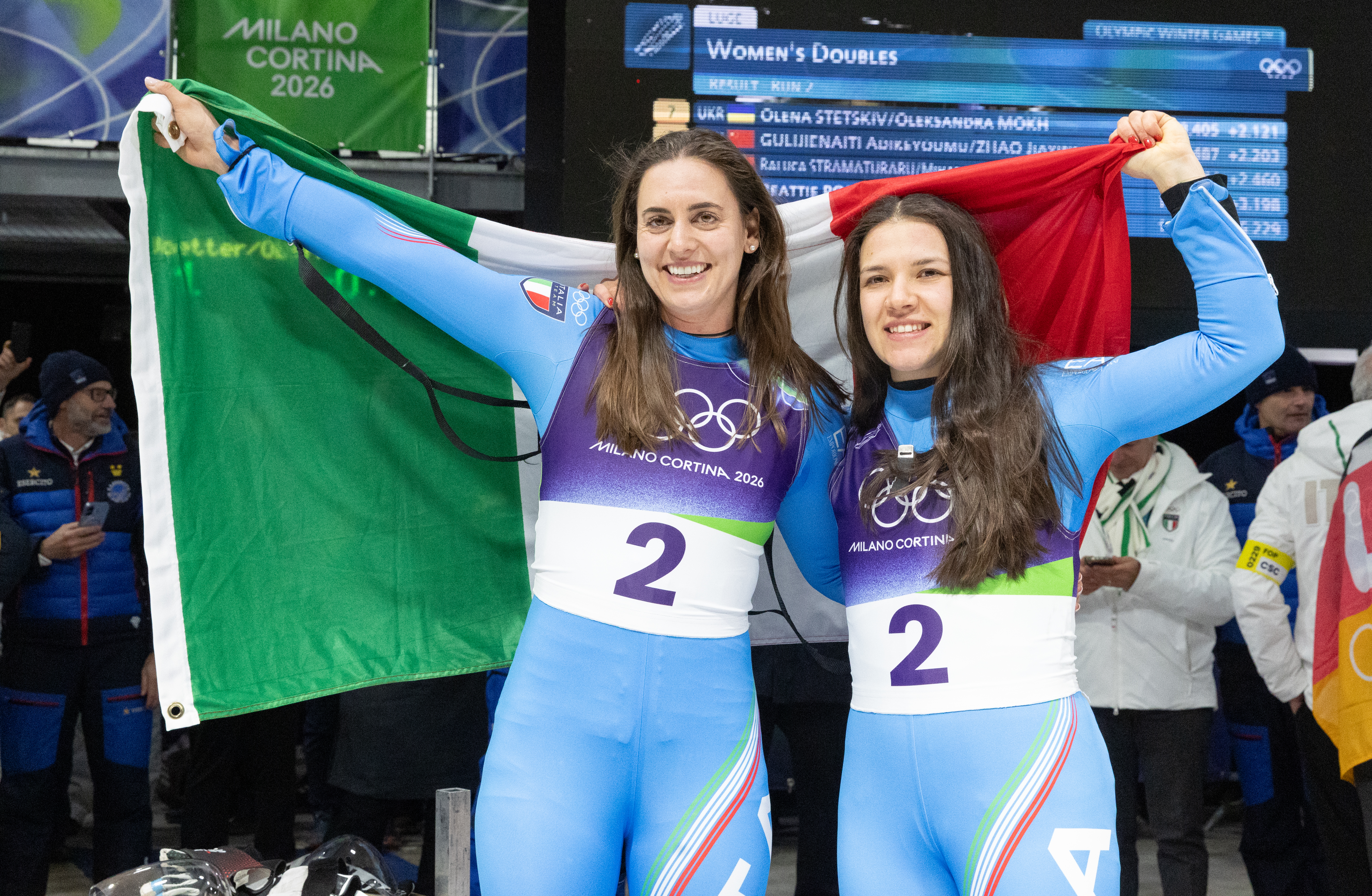
History was made with the Olympic premiere of Women’s Doubles Teams. In front of an enthusiastic home crowd, Andrea Vötter / Marion Oberhofer delivered Italian celebrations with gold in 1:46.284 minutes. “It still hasn’t sunk in that we are Olympic champions,” said Vötter after the emotional victory. Silver went to Dajana Eitberger / Magdalena Matschina (GER, +0.120), and bronze to Selina Egle / Lara Kipp (AUT, +0.259). The successful introduction of this discipline underlined the continued evolution of the sport.
The excitement continued in the Men’s Doubles Team event, where gold once again remained in Italy. Emanuel Rieder / Simon Kainzwaldner won with two near-perfect runs in 1:45.086 minutes, celebrating the biggest success of their careers. Silver was claimed by Thomas Steu / Wolfgang Kindl (AUT, +0.068), while Germany’s experienced duo Tobias Wendl / Tobias Arlt took bronze (+0.090), further extending their remarkable Olympic medal collection and once again demonstrating their consistency at the highest level.
The emotional finale came with the Team Relay. Since its introduction to the Olympic program in 2014, Germany has remained unbeaten – and that streak continued in Cortina. Julia Taubitz, Tobias Wendl / Tobias Arlt, Max Langenhan and Dajana Eitberger / Magdalena Matschina powered to gold in 3:41.627 minutes, setting a new track record. At the finish, all six athletes celebrated together shouting, “We are one team.” With this result, the doubles team of Tobias Wendl and Tobias Arlt crowned themselves the most successful Olympic lugers, with seven gold and one bronze medal.

Austria won silver (+0.542), while host nation Italy secured bronze (+0.849), bringing an intense Olympic week to a fitting conclusion.
Luge Medal Table - Olympic Winter Games Milano Cortina 2026
With five medal events, the historic Olympic debut of Women’s Doubles and another commanding Team Relay performance, luge in Cortina d’Ampezzo delivered one of the highlights of the Olympic Winter Games Milano Cortina 2026 – showcasing internationality, precision, courage and true team spirit at the highest Olympic level.
Watch the Highlights of the Luge Competitions during the Olympic Winter Games Milano Cortina 2026: