





Season Results Singles: When Thousandths Of A Second Decide The Crystal Globe
FIL Luge Season 2025/2026
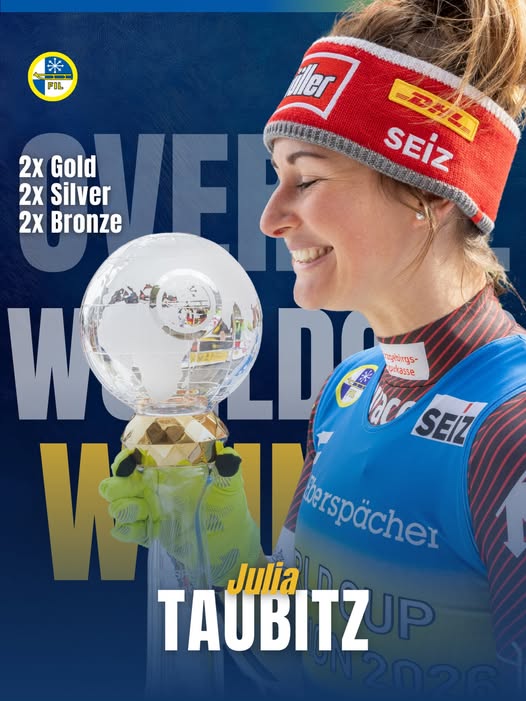
Berchtesgaden (FIL/13 Mar 2026) After the conclusion of the EBERSPAECHER Luge World Cup, it's easy to believe Julia Taubitz's conclusion: “I'm extremely happy,” said the 30-year-old German in Altenberg. At that moment, she was only thinking about the outcome of the season finale: “It was the most exciting World Cup final of my career, an absolute heart-stopping final.” After nine races, she had a four-point lead over her teammate Merle Fräbel. However, the 22-year-old was only able to compete on eight weekends because she had to take a break in January in Winterberg due to illness. The fact that she still managed to have a chance at the big crystal globe until the very end deserves the utmost respect.
In the last race of the season, Julia Taubitz got a little help from Kendija Aparjode. The Latvian, who had been in the lead after the first run, finished third, seven thousandths of a second behind Taubitz. If Aparjode had been eight thousandths faster, Fräbel would have won her first crystal globe instead of Taubitz winning her sixth, five of which were in a row. “I'm really glad that Kendija took part and helped me out,” said Taubitz gratefully.
The third luger still in contention for the overall victory going into the final was Lisa Schulte. The Austrian achieved this despite not winning a single race. Instead, the 25-year-old impressed with her consistency and three second places. In contrast, her compatriot Hannah Prock was able to enter the list of winners twice, both times in Winterberg. She is now in the same league as Taubitz (2 wins), Fräbel (3) and the American Summer Britcher (2).
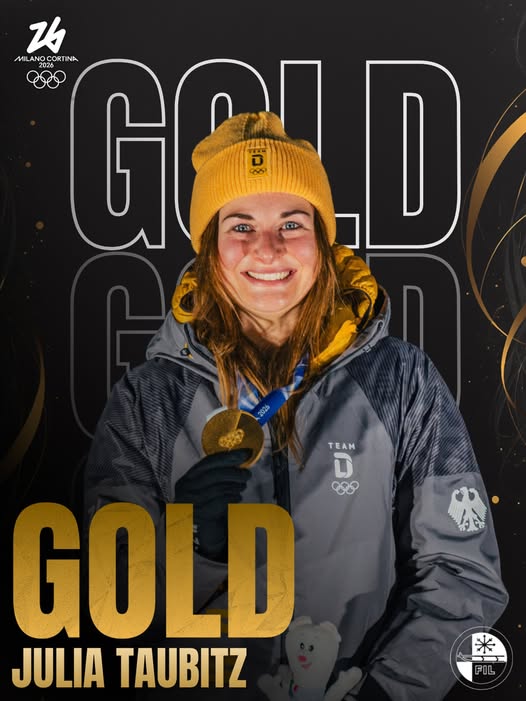
But the 2025/26 season also saw the Olympic Games take place in Cortina. As in the EBERSPÄCHER World Cup, the Pista Olimpica Eugenio Monti also saw a duel between Taubitz and Fräbel. Once again, Taubitz came out on top. Her rival Fräbel, who had been within striking distance in second place until then, lost control of her sled at the start of the third run and fell far behind. In the end, she finished eighth. It took time and strength to come to terms with this disappointment. “It was the most mentally exhausting season I've ever had,” Fräbel admitted in Altenberg. Her misfortune was the good fortune of Elina Bota (Latvia) and Ashley Farquharson (USA), who won silver and bronze respectively.
Felix Loch has had similar experiences to Fräbel at the Olympic Games. In Pyeongchang in 2018, he had his hand on the gold medal, his third in the singles, when he made a mistake in curve 9 in the fourth run and only finished fifth. In Cortina, as one of the favorites, he veered off course after just ten meters – instead of a medal, he only managed sixth place after a comeback. Instead, his teammate Max Langenhan triumphed. The 27-year-old summed up the season finale, which he had to miss due to a neck injury: "In the end, I can say that I clearly achieved my goal for the season.
I trained for exactly one race and was really looking forward to it. It worked out well at the Olympics, so I'm satisfied.“ He finished third overall in the World Cup: ”A nice way to end the season."
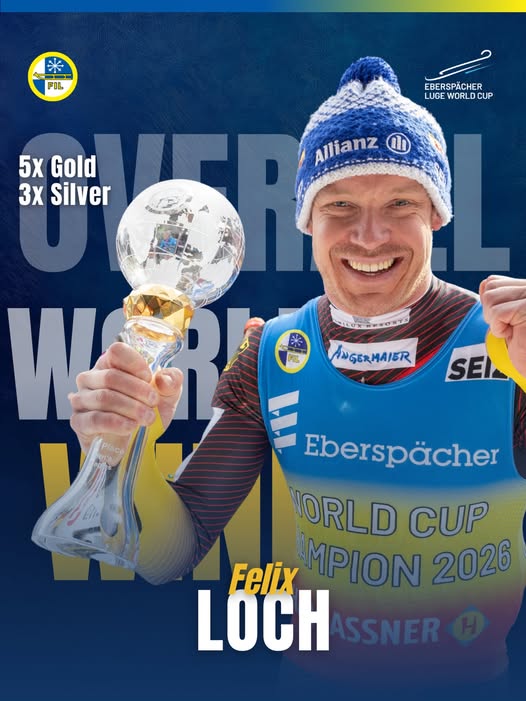
Loch also had a good finish in Altenberg. After five victories this winter, his 57th World Cup win in the singles not only put him on a par with record winner Armin Zöggeler (Italy), but also earned him his eighth crystal globe. “Apart from one small blemish, at the Olympic Games of all places, it was a successful season,” said the 36-year-old, “there were two days when things didn't go well. Otherwise, the season was sensational.”

Especially since he had a worthy rival in Jonas Müller. If the 28-year-old Austrian, who won silver behind Olympic champion Langenhan at the Olympic Games, had not decided not to compete in the final in Altenberg, there would have been a big showdown there. As it was, the 28-year-old was unable to add to his three victories this season.
Similar to Langenhan, the Italian team led by Dominik Fischnaller also focused entirely on the home games in Cortina during the past season. They skipped two World Cup weekends in order to gain an advantage on the new track. This paid off not only for Fischnaller: the 33-year-old Italian won bronze. At the finish line, he was celebrated by the entire team as if he had won gold. At that point, no one knew that two more gold medals were to follow in the two doubles competitions.