




Super Slide Mode: The Fastest Sport on Ice Gets Even More Exciting
The FIL is bringing a fresh breeze to the World Cup circuit with the 2026 International Luge Regulations (Internationale Rennrodelordnung/IRO) – and the centrepiece of the changes has a name that says it all. Sports Director Matthias Böhmer talks about the Super Slide Mode, the other IRO changes and a World Cup season that will go down in history.
Matthias Böhmer, the undisputed highlight of the new IRO is the Super Slide Mode. What is it all about?
We always face the same dilemma: when we want to do something new – and we do, we are very, very open to new ideas – it usually comes with a significant financial commitment in the areas of race formats and track infrastructure. Those costs have to be spread across multiple shoulders, and that is neither sustainable nor efficient. So, to get straight to the point: what can we do differently without requiring all organisers to invest heavily – using everything that already exists?
And the answer?
We took some inspiration from the FIS, from alpine skiing. The athletes in downhill and super-G manage with far less training than we do. So we decided to minimise the training runs in the Super Slide Mode. That the new format will make its debut in Oberhof in January is almost self-evident. The track operators in Oberhof have provided a great deal of training opportunity in recent years, and the crash rate there is also very low.
How does the Super Slide Mode work in practice?
The overall concept, in a nutshell: no separate Nations Cup, no seeding training – everyone gets two training runs, and then there is a qualification run, including the seeded groups. The top 30 singles and 24 doubles qualify for the final and simultaneously determine the start order. Everyone starts from the qualification run onwards with a reaction start, similar to the team relay. At the finish, however, they cross the line in the normal way, without a touchpad.
And between the runs?
That is a key change. Normally in luge you can adjust everything on the equipment between runs – tune it to the weather conditions, whatever you like. In the Super Slide Mode that is no longer possible. After the first run, the sleds go into a parc fermé – you could say we drew inspiration from Formula 1 there – and are supervised by the Technical Delegate. If there is damage, work on the sled is of course permitted, but otherwise nothing may be changed. Sanding is only allowed with the official sandpaper issued by the Technical Delegate – and it has the same grit for everyone.
That sounds like more equality of opportunity.
Yes, that is also the goal. Nobody should be able to gain an advantage through equipment changes or readjustments between runs. At the same time, we are hoping for more storytelling, more action and a fresher feel across the whole World Cup circuit. The Super Slide Mode counts as a regular World Cup event and is scored accordingly.
And if it goes well?
Then I could imagine several Super Slide Mode races taking place in the following season. You would then have two categories, so to speak: the classic World Cup format and the new Super Slide Mode. Let's see what our first test brings – but I am already convinced it will be a success.
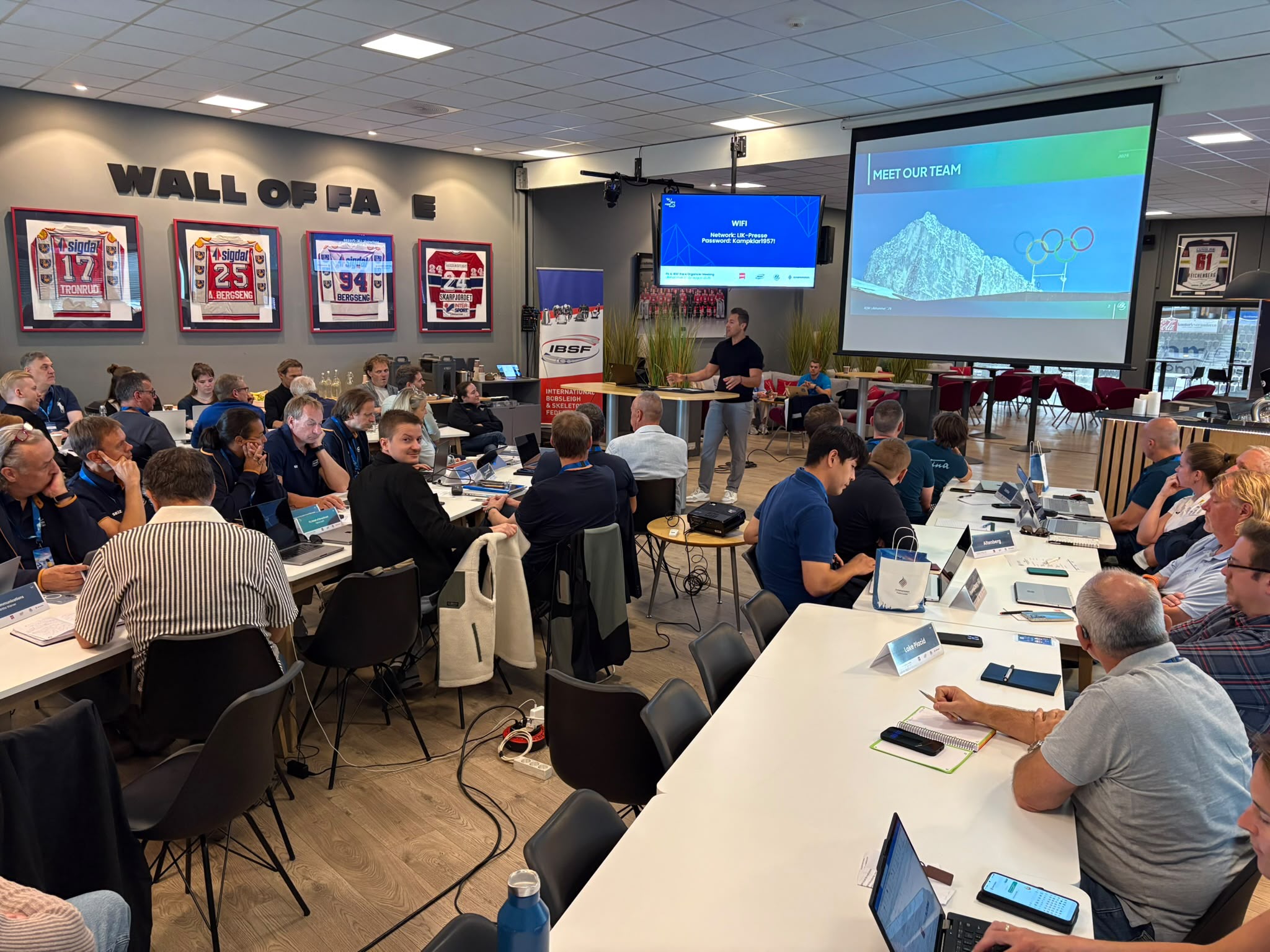
The Super Slide Mode will have its real-world test in Oberhof – and it is symbolic of what the International Luge Federation stands for: preserving what has been built, being open to new ideas, and working in the best interests of the sport and its protagonists. "It is you who create a safe place for the athletes," FIL President Einars Fogelis told the assembled organisers at the Race Organiser Meeting in Lillehammer in mid-August. A safe place is also a place where the sport can become bolder, faster and more modern. No contradiction there, as Böhmer demonstrates.
Matthias Böhmer, let us move on to the other IRO changes. What is happening in the youth categories?
At first glance, the Youth A Continental Cup disappears – at second glance, only the name changes. The Youth A Continental Cup becomes the World Youth Series – Europe, North America, Asia. The new name is no coincidence: with "World" in the title, we are hoping for better eligibility for funding and more financial support for the participating nations. In some countries, it makes a difference whether you compete at a continental or a global level when applying for institutional support. In terms of rules and competition format, however, everything remains as before.
And in the junior category?
We are upgrading the World Championships and making them more attractive. Whoever finishes first at these events receives a wildcard for the last World Cup race of the season. The 42nd Junior World Championships will be held in Winterberg in mid-February – and for the first time we will be awarding wildcards there for the World Cup final in Königssee at the beginning of March. Also new this season: for the first time, the Junior World Championships will include mixed events, in both singles and doubles.
Why this upgrade now?
Because we want the title to mean more. Becoming Junior World Champion should have tangible consequences – and not just: here is your medal, and then everything goes quiet again.
The Host Nation Starting Spot is also a new feature at the World Cup.
With this change we are expanding the fields from 30 to 31 in singles and from 24 to 25 in doubles events. The host nation of a World Cup race will in future receive one additional start per discipline – except in the team relay and mixed events. However, this applies only once per season and per discipline, not at every home race. The German Bob and Sled Association BSD could therefore choose when to use its national quota – for example in the women's singles at the season opener in Winterberg, for the doubles in Altenberg or Oberhof, in the men's singles at the finale in Königssee. Or all four at the same event.
To finish: what is the highlight of the winter?
It would be too narrow to speak of a single highlight – we have ten! Clearly, the World Championships in Innsbruck-Igls as a double World Championship – artificial track and alpine – is something very special and delivers a world premiere. The title events for the coming years have already been awarded: Königssee in 2028, Lake Placid in 2029. In the next two years we also want to confirm the host venues for 2031, 2032 and 2033. The goal is to bring our premium product to tracks and continents around the world while also giving organisers the planning certainty they need.
One last sentence?
Gladly. The fastest sport on ice is moving at one hell of a pace!