






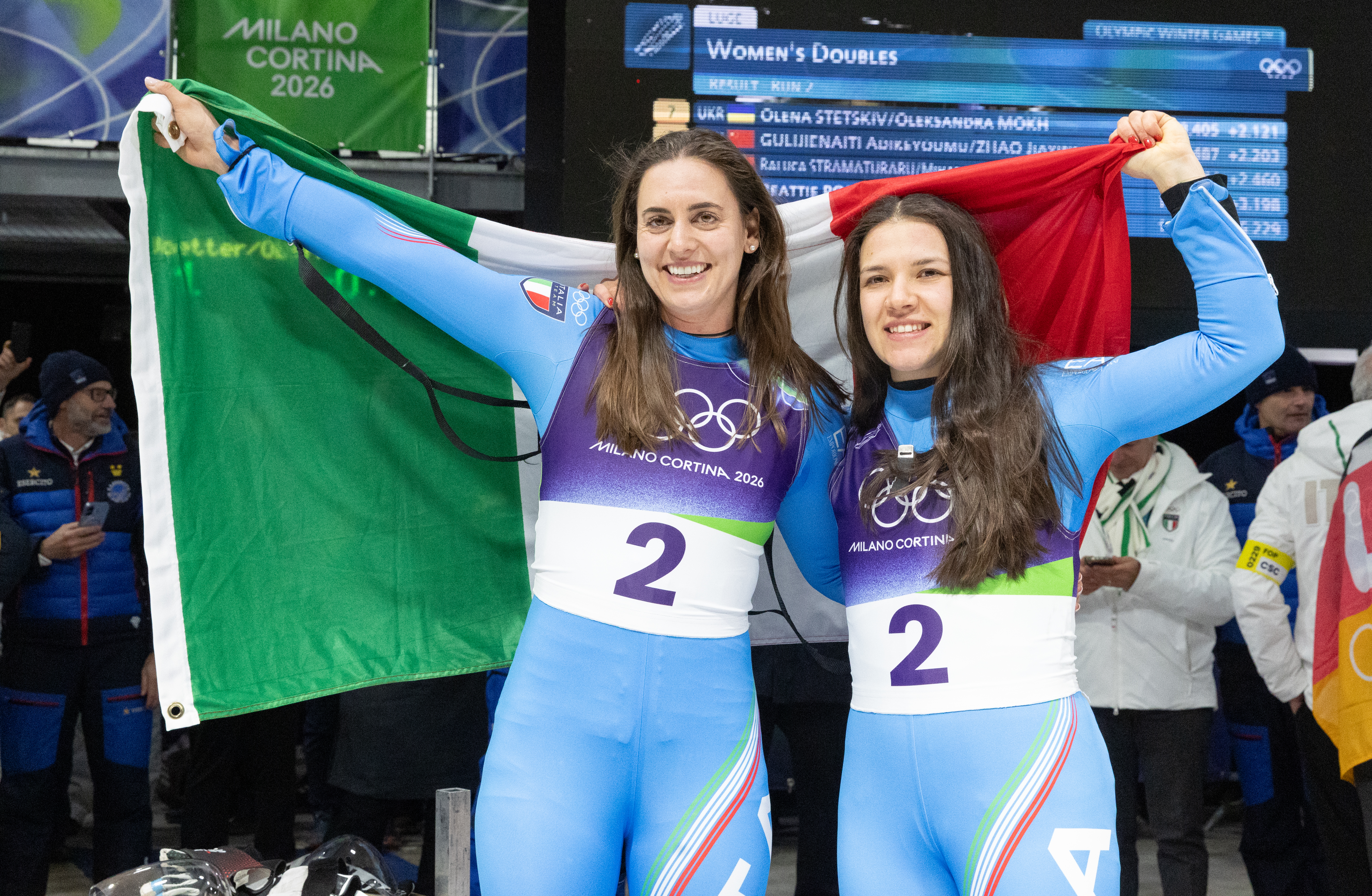
Vötter/Oberhofer: Gold on Home Ice – and the Next Goal Is Already Set
On February 11, 2026, two South Tyroleans celebrated at the finish line of the Pista Eugenio Monti in Cortina. Andrea Vötter and Marion Oberhofer had just won the first-ever Olympic women's doubles luge race – with a combined time of 1:46.284 minutes, twelve hundredths of a second ahead of German rivals Eitberger and Matschina. 62 years after the introduction of men's doubles at the Olympics, women finally had their own Olympic title on offer. And the Italians won it in front of a home crowd.
"Winning here, on this track, at home – that means so much to me and to us," Vötter said afterward.
Four Years, One Plan, One Goal
That this would happen was neither a given nor a coincidence. "The project started four years ago," Vötter recalls. "When women's doubles became an Olympic event, we looked at how it worked, whether we could keep up with the best." The answer came in Cortina: not just keeping up – winning.
For Vötter, born in 1995 in Brixen, it was her fourth Olympic appearance. For Oberhofer, born in 2000 in Innichen, it was her first – and straight to gold. "A lot of people are part of this medal," Vötter says. "Everyone gave everything, our coaches, our support staff, and the backing of the sports group were and are incredibly important." Oberhofer adds: "It was wonderful to see how many people shared in our joy. Family, friends, sponsors. Whenever I look back at the photos, I still get goosebumps."
Muscle Training Against Neck Problems
Both used the summer after Cortina deliberately. Vötter spent time with family and friends at Lake Garda and on mountain hikes. Oberhofer had a clear plan after the celebrations: she wanted to address her physical niggles before team training began.
"Last winter I had neck problems, and I wanted to get rid of them," she explains. "In luge, we're always lying in the same position, which means certain muscles get overworked while others get neglected. In this year's summer training, I specifically targeted those deficits and strengthened the muscles that work against the luge position."
Tennis and a Shared Hero
Both share another passion: tennis. Vötter's boyfriend, South Tyrolean luger Kevin Fischnaller, has been clearly outplaying her on the court. "But I've taken private lessons, and I'm getting better – now we're battling it out for döner kebabs and ice cream," she laughs. Oberhofer, too, picked up a tennis racket years ago and has found a second sporting love on the court. Both agree on their favorite player: Jannik Sinner, the South Tyrolean world number one in men's tennis – one of their own. No question about it.
What's Still Missing – and Why the Overall World Cup Matters More Than a World Title
They have Olympic gold. Neither Vötter nor Oberhofer has yet won a World Championship title in the general class. The World Championships in Innsbruck-Igls in February 2027 offer the next chance. "It'll be very tough against the Austrians in Innsbruck," Vötter says. Still, they'll give it everything.
Both would rank the overall World Cup title above a World Championship title. "Nailing one race is easier than being consistently at the front across nine races," Vötter explains. "The overall World Cup would be my first goal." Oberhofer feels the same way. In recent years, she's increasingly built her training around a single season highlight – now it's about bringing that consistency across an entire season.
"Just because we won Olympic gold doesn't mean we're satisfied now. We want to be right up there again next season too," Vötter says. "Cortina shouldn't be a one-hit wonder."
Friendship as the Foundation
What connects the two goes beyond the track. "Friendship makes a big difference for success," Oberhofer says. "It's born on the track, but the environment around it matters too. We spend a lot of time together." Over the summer, it was actually good not to see each other constantly – but the connection remained, through shared sponsor appointments, training sessions, conversations.
Vötter moved to Meransen in September 2025. Oberhofer lives in Rodeneck. Both places are just a few kilometers apart. "The friendship was born in the sport," Oberhofer says. "But it'll last for life."